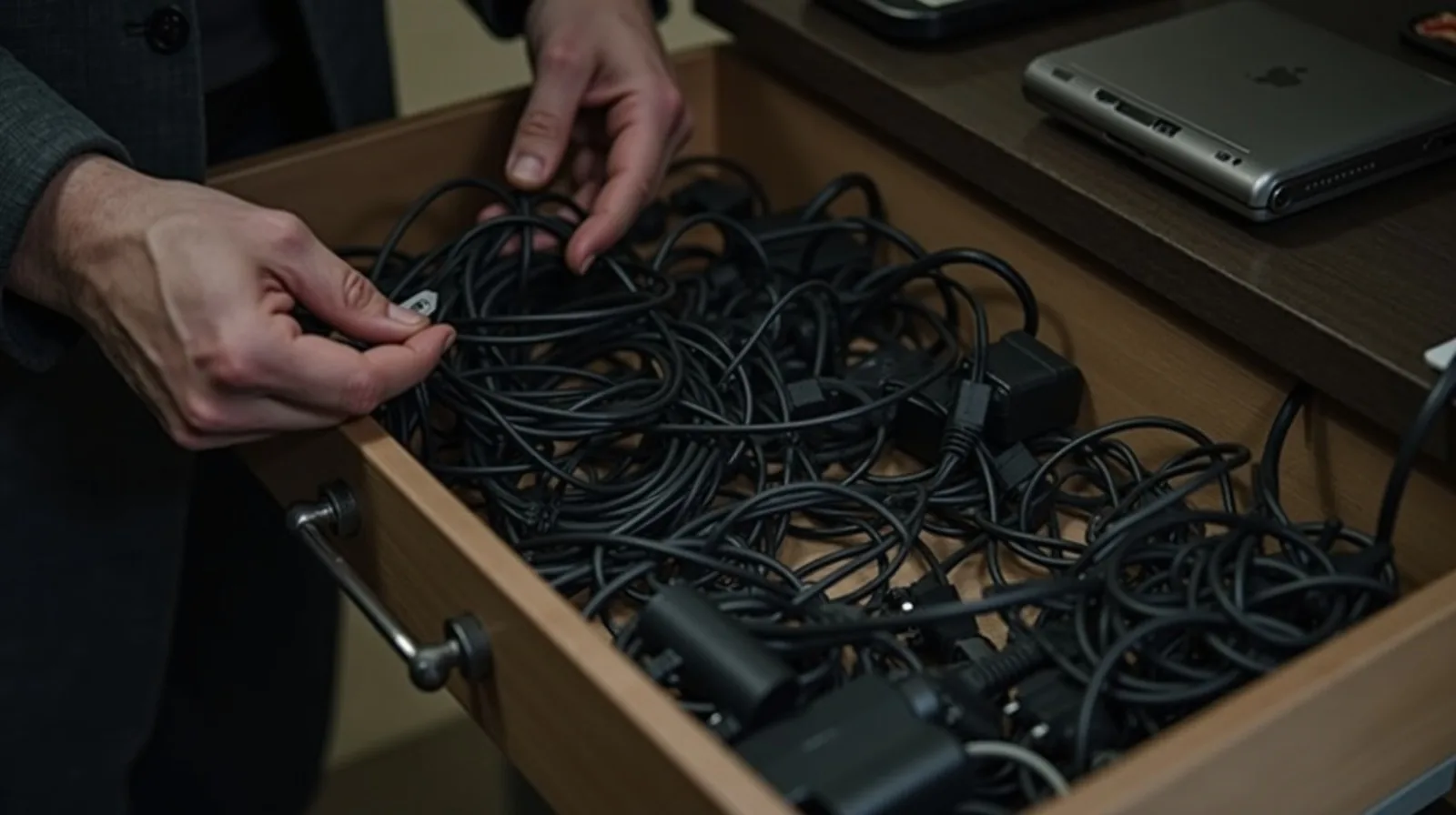
Most homes end up with a tool “system” that nobody planned: a screwdriver in the kitchen drawer, a hammer in the hall closet, a tape measure that migrated to a bag of batteries and never came back. Then a shelf needs hanging or a cabinet door starts to sag, and the first twenty minutes of the job go to hunting. A small, deliberately chosen kit kept in one place solves most of it — and it doesn’t take a workshop.
What Actually Earns a Spot
A starter kit covers a short list of jobs: tightening, measuring, hanging, cutting, gripping, and cleaning up afterward. Anything beyond that can wait until a project asks for it. A solid set of about a dozen items handles the vast majority of what comes up in a typical home:
- A claw hammer. A medium-weight one drives nails and pulls the ones that went in crooked.
- Screwdrivers. Two sizes each of Phillips and flathead, or one driver with swappable bits. A set of tiny precision drivers handles glasses, remotes, and electronics.
- A tape measure. A 16- to 25-foot locking tape is the one tool you’ll reach for most.
- A small level. It keeps shelves and frames from drifting off true. A phone level app works in a pinch, but a real one is quicker.
- Pliers. Needle-nose for small grabbing and bending, and slip-joint or adjustable pliers for larger work.
- An adjustable wrench. It covers most nuts and bolts, including the ones under the sink.
- A utility knife with spare blades. For opening boxes, trimming tape, and scoring materials — and a fresh blade is safer than a dull one.
- A hex key set. Flat-pack furniture and bike seats all want one.
- A stud finder and a pencil. Hanging anything heavy starts with knowing what is behind the wall.
- A flashlight or headlamp. Because the problem is always in a dark cabinet.
- Duct tape, painter’s tape, and a small assortment of fasteners. Screws, nails, wall anchors, and a few zip ties.
If you add one power tool, make it a cordless drill with a bit set. It pays for itself the first time you assemble furniture.
Buy Fewer, Better, and Only When a Job Asks
A pre-packed 200-piece set looks like a bargain, but most of it is filler: dozens of bits you’ll never use, soft metal that rounds off, and pliers that flex. A better approach is to buy the core items individually in decent quality and add the rest only when a real project needs it. Hand tools last decades when they’re well made, so the extra few dollars on the hammer, the tape, and the screwdrivers is spread across a very long time.
Borrowing and renting fills the gaps. A tile saw, a ladder tall enough for the stairwell, or a pressure washer is a one-weekend tool for most households, and a neighbor, a tool library, or a rental counter is cheaper than owning one that sits in the garage for years.
Give Every Tool One Home
The kit only works if it lives in one findable place, and ideally one that suits how you really work. Three setups cover most homes:
- A single toolbox with a top tray. The simplest option. Small items ride in the tray, bigger ones below, and the whole thing carries to wherever the job is — a real advantage in an apartment.
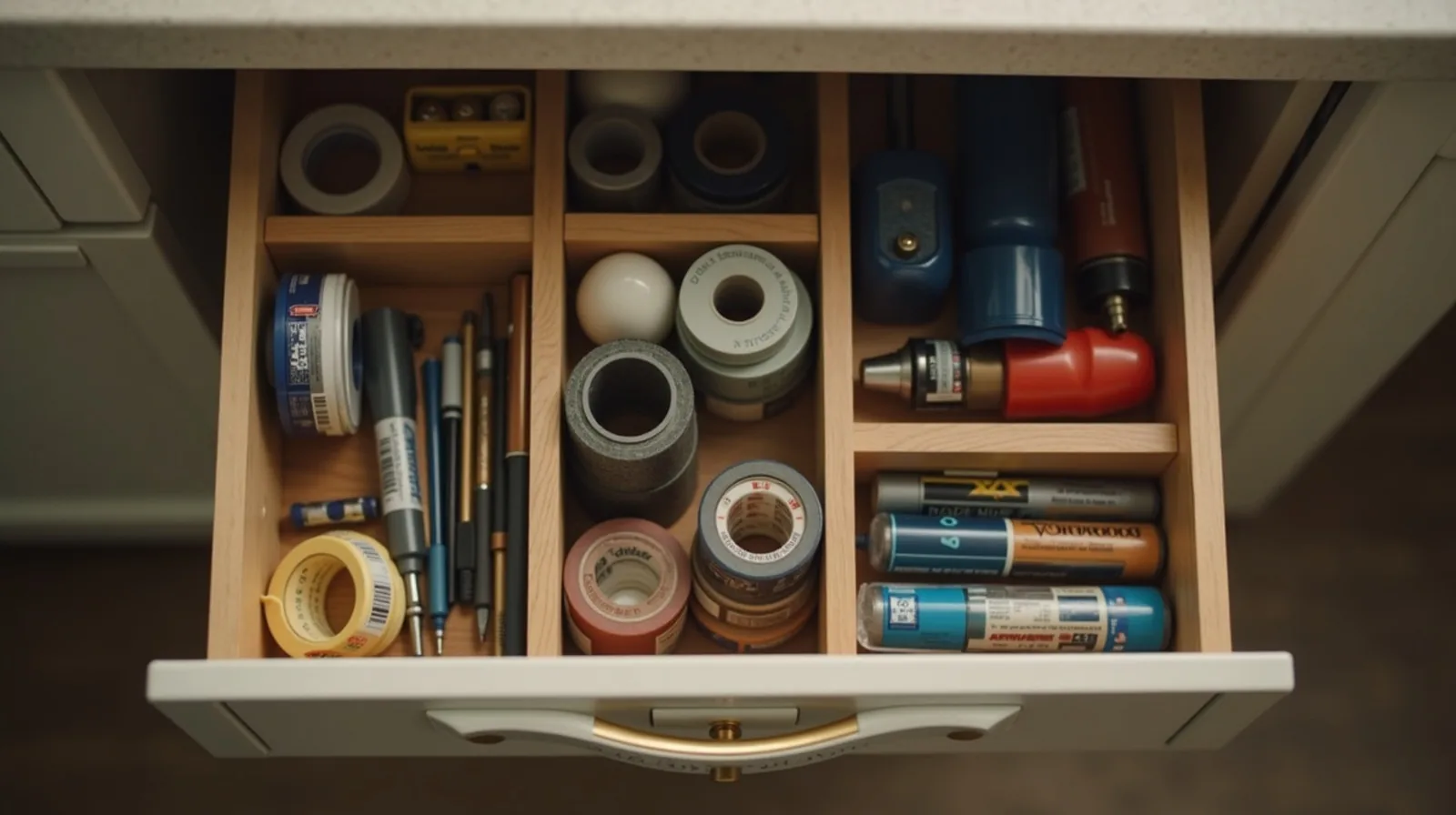
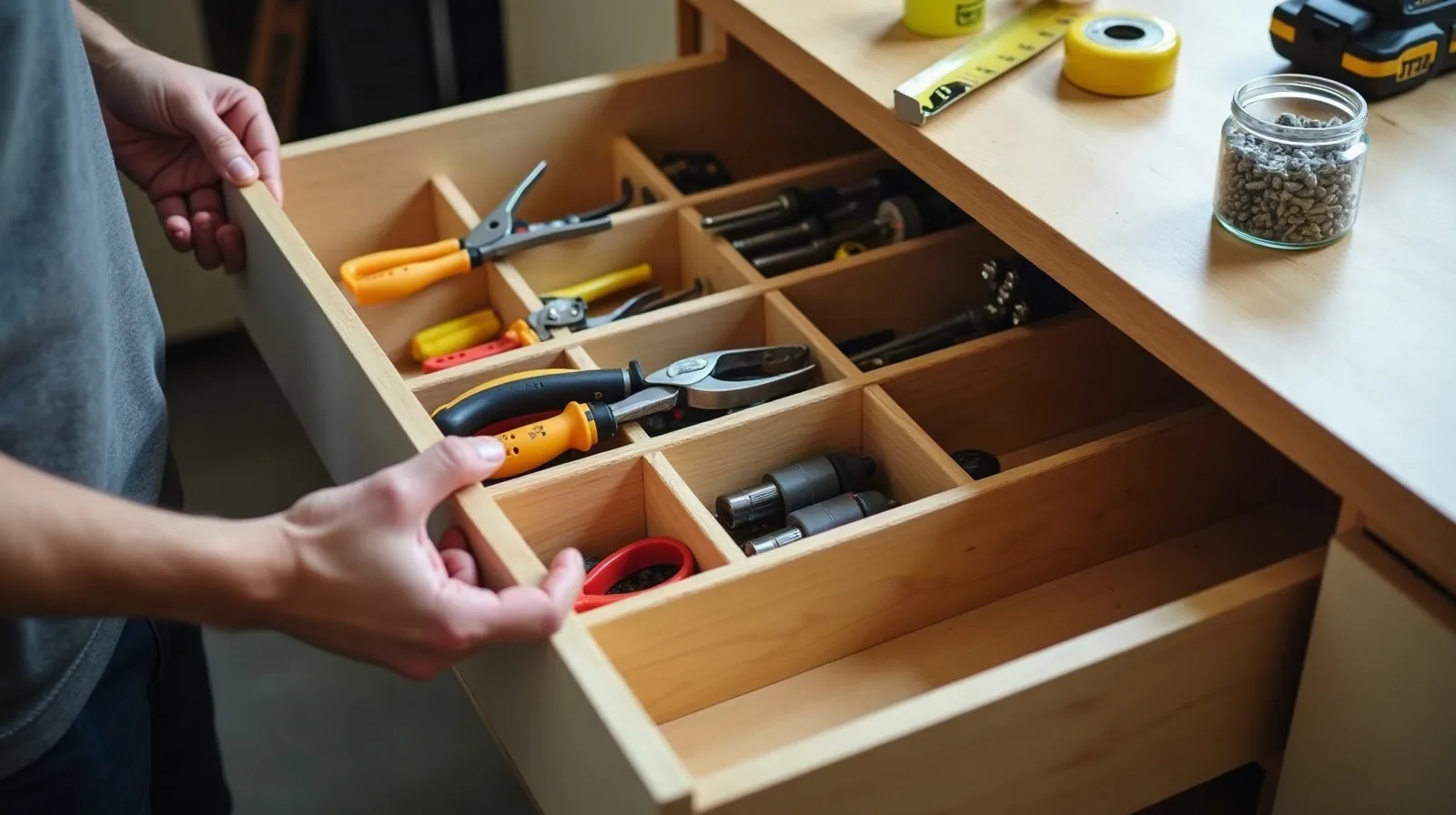
- A drawer or closet shelf with dividers. A hall closet shelf or a deep kitchen drawer with a few trays works if you rarely carry tools far. Keep it to one spot rather than a drawer here and a drawer there.
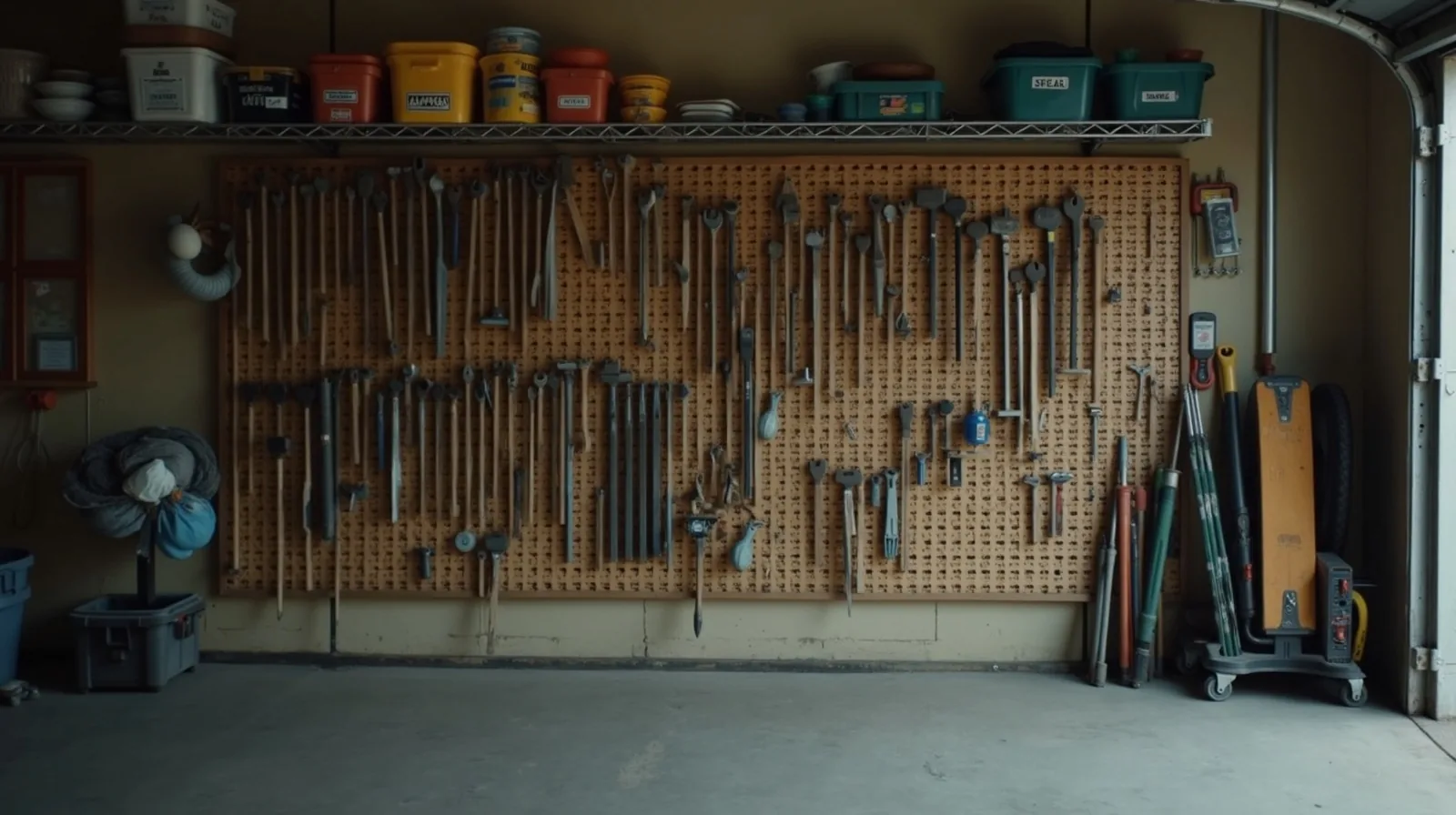
- A wall panel with outlines. In a garage or utility room, a pegboard with each tool’s shape drawn behind it makes a missing tool obvious in a second.
Whichever you choose, sort within it by job rather than by tool type: everything for hanging (hammer, level, stud finder, anchors) in one grouping, and everything for assembly (hex keys, drivers, pliers) in another. That’s how you’ll actually reach for them.
Keep the Small Stuff From Going Missing
It’s rarely the hammer that vanishes — it’s the fasteners, the hex key, and the batteries. Sort screws, nails, and anchors into small labeled containers or a compartment organizer, with similar sizes together, and drop the leftover hardware from every furniture assembly into a single jar so spares are in one place. Tape a spare hex key to the box. Keep the manuals and warranty cards for the few power tools you own in a single envelope, so they don’t scatter.
Also keep the safety basics in the box: a pair of safety glasses, work gloves, and a small first aid kit. Needing them and not having them close is how a ten-minute fix turns into an urgent-care trip.
The Two-Minute Habit That Keeps It Working
A kit stays organized through one small routine: when the job ends, tools go back before you walk away. Wipe off dust and moisture, because a damp tape measure or wrench rusts in a closed box. Retract the utility knife blade, and swap in a fresh one when it drags. Once or twice a year, open the box, return strays from around the house, and replace what’s worn or used up — blades, tape, batteries in the flashlight. Ten minutes does it, and the next time something on the wall or under the sink needs attention, every tool is exactly where it should be.