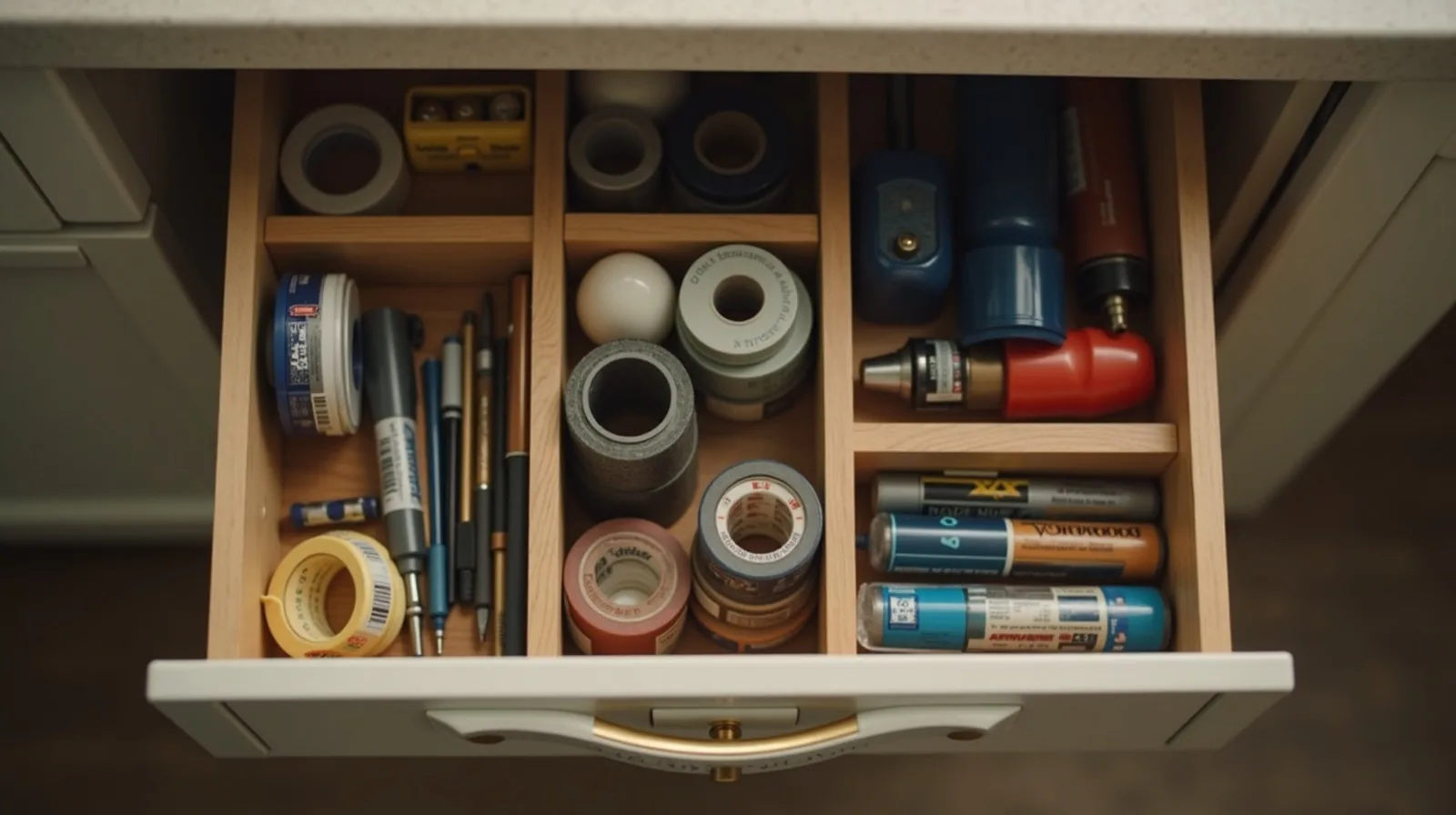
Let’s clear something up: the junk drawer is not a moral failing, and you don’t have to get rid of it. Every home needs a spot for the genuinely useful miscellany that doesn’t belong anywhere else — tape, spare batteries, a screwdriver, twist ties, the odd key. The problem isn’t having the drawer; it’s that with no structure inside, it becomes an unusable jumble where you can never find the thing you opened it for. The fix keeps the drawer and simply gives it order.
Empty it and see what’s really there
Start by dumping the entire drawer out onto a table. This is the only way to see what you’ve actually been keeping — and it’s always a revealing mix of the useful, the useless, and the mysterious. Wipe out the empty drawer (junk drawers get surprisingly grimy), and sort the contents into rough piles as you go: things that belong here, things that belong somewhere else, and trash.
Purge the genuine junk
A junk drawer earns its name by accumulating true junk, so be honest as you sort:
- Toss the useless — dead pens, dried glue, expired coupons, random broken bits, takeaway menus, and the mystery objects you can’t identify (if you don’t know what it is or goes to, you don’t need it).
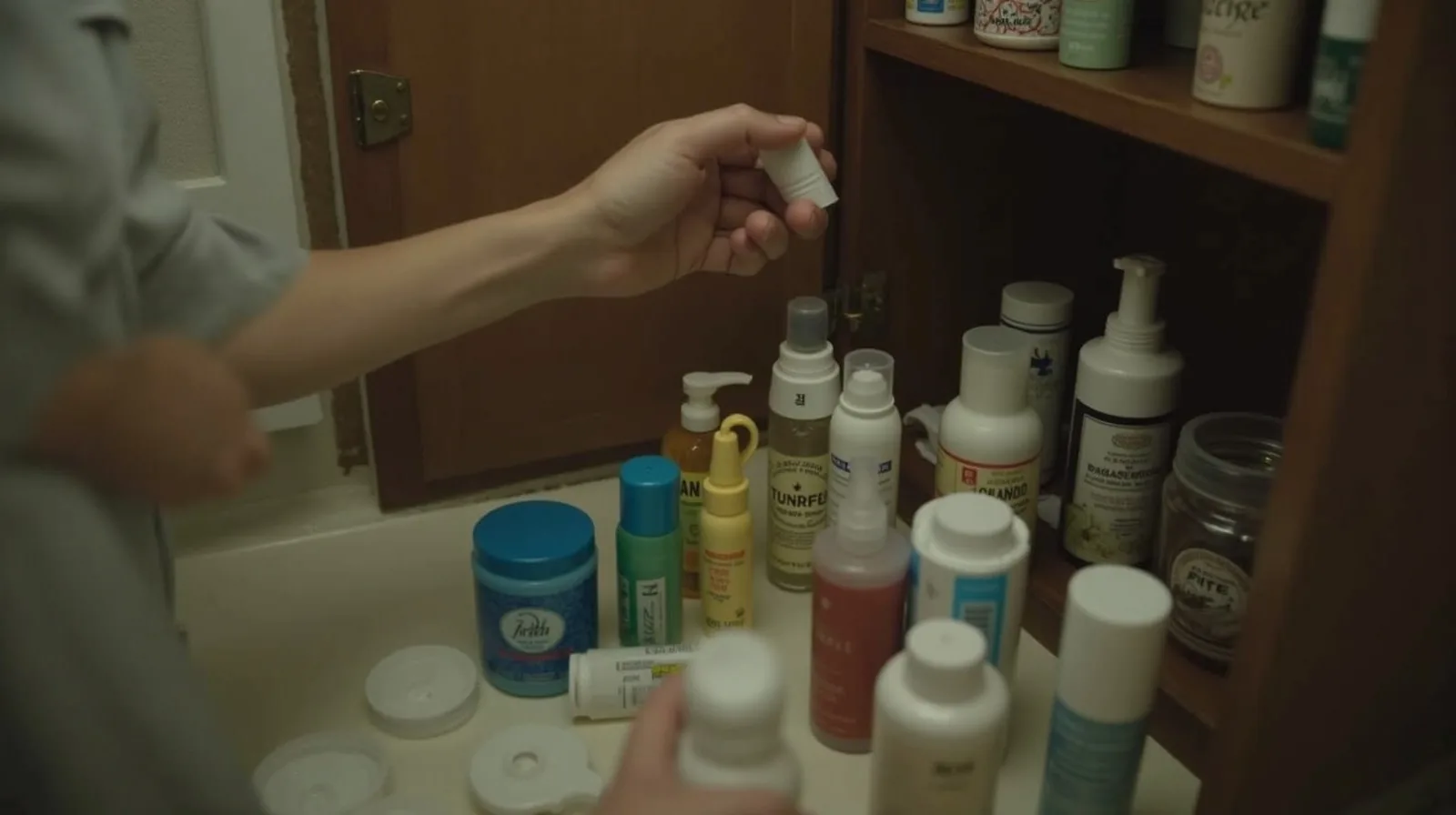
- Relocate the misfiled — things that drifted here but have a real home elsewhere (the stray medication, the office supply, the tool) go back where they belong.
- Keep only the true catch-all items — the useful small stuff that genuinely has no other logical home.
You’ll usually cut the volume in half, which is what makes the rest organizable.
Add compartments
Here’s the single move that transforms a junk drawer: dividers. A jumble becomes usable the moment everything has a lane. Use a drawer organizer, small containers, or adjustable dividers to create compartments, then give each category its own space — writing things together, tools together, batteries together, tape and adhesives together, tiny bits in a small container so they don’t scatter. Now the drawer is really a small, sensible storage tray, and you can find the scissors at a glance instead of digging.
Keep it from re-cluttering
The junk drawer will always attract stray items — that’s its job — so keep it honest with a light touch:
- Return things to their compartment, not just into the drawer, so the structure holds.
- Don’t let it become a catch-all for things with real homes; a quick redirect keeps it from overflowing.
- Do a two-minute re-sort now and then — toss the new dead pens, put strays back — rather than waiting for it to become a jumble again.
You get to keep your junk drawer — guilt-free. Just empty it, purge the true junk, add dividers to give everything a lane, and do the occasional quick reset. The useful catch-all stays useful, and the one drawer everyone dreads opening becomes one you actually rely on.