
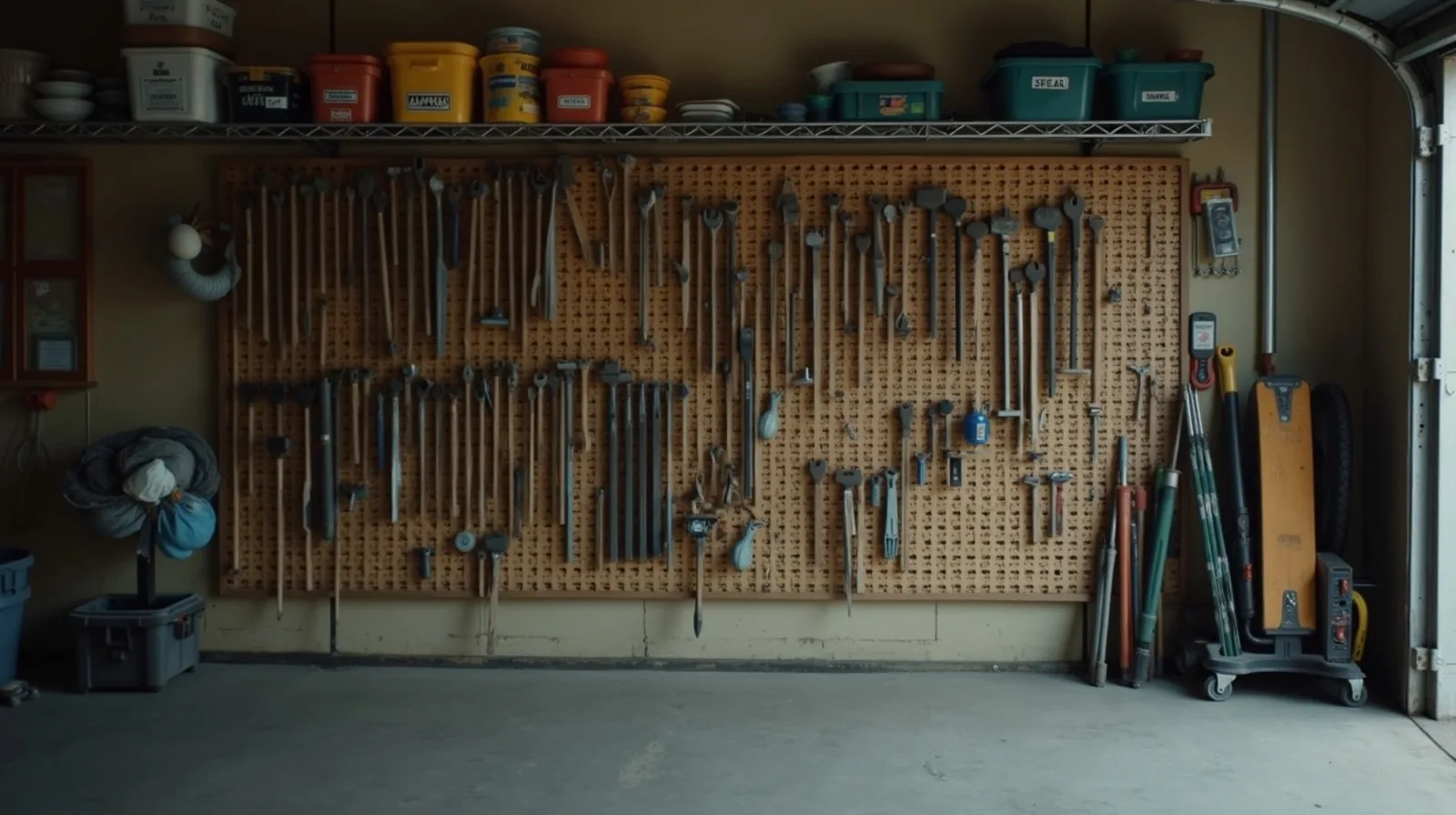
The garage is where a home’s overflow goes to be forgotten. Tools, sports gear, holiday decorations, paint cans, half-finished projects, and boxes you haven’t opened since you moved all end up in one heap on the floor — until you can’t find anything, can’t park the car, and dread opening the door. It gets that way for one reason: nothing in the garage has a home. Unlike the rest of the house, it has no built-in zones, so everything just gets set down wherever there’s space. A focused weekend and a simple zoning plan can reclaim the entire room.
Saturday: empty and sort
You can’t organize a garage in place — you have to see everything first. On a dry day, pull it all out onto the driveway. As you do, sort into broad categories: tools, sports and outdoor gear, seasonal and holiday storage, automotive, garden, and so on. Grouping like with like immediately shows you what you actually own — usually including several of the same thing and a lot you’d forgotten. Sweep the empty garage while it’s clear; you won’t get another chance this easily.
Purge without mercy
The garage is where unused stuff hides, so this is your moment to cut it down — a smaller pile is far easier to store:
- Toss the broken and the dried-up — dead tools, hardened paint, perished hoses, mystery parts.
- Donate or sell the unused — the gear for hobbies you’ve moved on from, the duplicate tools, the “might need it” items you haven’t touched in years.
- Dispose of hazards properly — old chemicals, paint, and batteries go to proper disposal, not the bin.
Be honest: if you haven’t used it in a couple of years and it isn’t genuinely seasonal, it’s probably just taking a zone from something you do use.
Sunday: assign zones and go vertical
Now give the survivors homes. The two principles that make a garage stay organized:
- Zone by use. Assign each category its own area — a tool zone, a sports zone, a seasonal-storage zone, a garden zone — and, crucially, keep a clear zone for the car if it lives here. Put frequently used things where they’re easy to reach and rarely used things up high or in the back.
- Get everything off the floor. Floor space is the garage’s scarcest resource, so move storage up: wall hooks and a pegboard for tools, sturdy shelves for bins, overhead racks for seasonal items and long gear. A garage with clear floors and full walls holds far more and actually feels usable.
Use clear, labelled bins for the loose stuff so a category stays contained and you can see what’s inside.
Keep it that way
A zoned garage stays organized far more easily than a heap did, because now everything has a place to return to. Put things back in their zone when you’re done, resist letting the floor become a landing pad again, and do a quick re-sort each season as you swap holiday and weather gear in and out. The one weekend of work holds for years if you protect the zones.
The garage isn’t chaotic because you own too much — it’s chaotic because nothing has a zone. Empty it, sort and purge, assign each category an area, and move storage onto the walls. You’ll get a whole room back, find your tools in seconds, and maybe even park the car inside again.