An air fryer that turns out soggy fries, dry chicken, or a batch that’s scorched on one side and pale on the other usually isn’t broken or badly made. It’s a small convection oven with a strong fan, and it rewards a slightly different set of habits than a full-size oven or a deep fryer does. Almost every disappointing result traces back to one of a handful of fixable mistakes — not the machine, and not the recipe.
Overcrowding Cuts Off the Hot Air Doing the Work
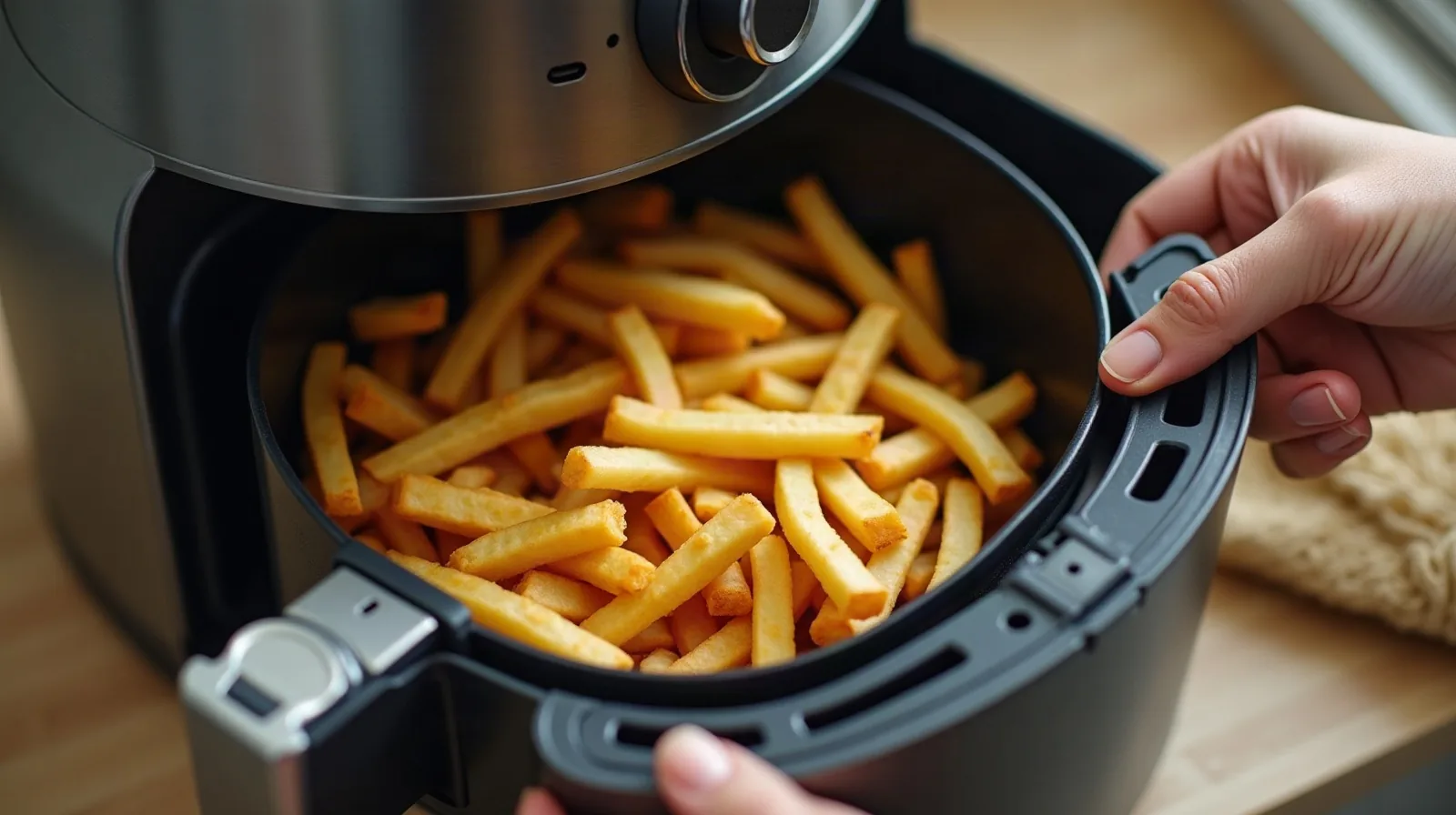
An air fryer doesn’t fry in the traditional sense — it circulates very hot air rapidly around the food, and that moving air is what actually crisps the surface. Piling the basket full works against the one thing making the whole appliance function: air needs to reach every side of every piece, and a crowded basket blocks that circulation the same way stacking food in a pan traps steam. The result is food that steams instead of browns — pale, soft, and unevenly cooked, with the pieces touching each other coming out the worst. Cooking in smaller batches, spread in a single layer with a little space between pieces, takes a few extra minutes but is the single biggest lever for genuinely crispy results. For anything that shrinks a lot as it cooks — sliced vegetables, shredded items — a slightly looser layer than feels necessary at the start still ends up crowded once it cooks down.
Skipping the Preheat Throws Off the Whole Cook
Adding food to a cold basket means the first few minutes of cook time go toward heating the chamber rather than cooking the food, which throws off both timing and texture. A three-to-five-minute preheat with the empty basket running gets the chamber to temperature first, so the food starts crisping the moment it goes in instead of slowly catching up. It matters most for anything breaded, battered, or meant to have a sharp, crisp exterior — a cold start gives moisture more time to seep out before the surface sets, which is part of why preheated batches brown so much more evenly than ones thrown in straight from the fridge.
Wet Food Never Gets Actually Crispy
Moisture is the direct enemy of crisping. Vegetables rinsed and shaken but not really dried, a marinade that’s still dripping, thawed food that hasn’t been patted down — all of it turns the first several minutes into steaming rather than browning, because that surface water has to evaporate before the outside can actually crisp. A quick pat with a clean kitchen towel or paper towel before anything goes in the basket removes the excess and lets the hot air get to work immediately instead of fighting standing moisture first.
The Shake You’re Probably Skipping
Even with good spacing, the air moving through the chamber doesn’t reach every surface of every piece equally the whole time it cooks, which is why a mid-cook shake or flip matters more in an air fryer than it would in a full-size oven. For smaller pieces — fries, wings, chopped vegetables — a quick shake of the basket every five to seven minutes redistributes everything so each side gets its turn facing the airflow. Larger single items, like a chicken breast or a fillet, just need one flip about halfway through. Skipping this step is a common reason for food that’s golden on top and pale or soggy on the side that sat against the basket the whole time.
Oil: Too Little Skips the Browning, Too Much Smokes
A little fat helps an air fryer do its job — it conducts heat into the food’s surface and helps it brown, which is part of why bone-dry, un-oiled vegetables can come out looking dry and dull rather than golden. The fix is a light, even coat, not a puddle: tossing food in a bowl with a spoonful of oil before it goes in the basket, or brushing it on, coats everything without leaving excess sitting in the bottom of the basket to smoke. A canned aerosol cooking spray is worth skipping specifically for a nonstick basket — the propellants and additives in most of them build up into a sticky film that’s hard to strip off nonstick coating over repeated use. A refillable oil mister or just a light hand with a spoon and a toss avoids the problem entirely.
Converting an Oven Recipe to the Air Fryer
An air fryer’s small chamber and closer heating element cook noticeably faster and hotter than a full-size oven at the same setting, which is why following an oven recipe’s temperature and time exactly tends to overcook or scorch the outside before the inside catches up. A reliable starting adjustment is to drop the temperature by about 25°F from what the oven recipe calls for, and check for doneness at roughly 20% less time than the recipe states — then keep watching from there rather than trusting the clock completely, since basket size, food thickness, and how full it is all shift the real cook time. For meat and poultry specifically, a food thermometer is worth using regardless of how confident the timing guess feels; internal temperature is the only number that actually confirms it’s done.
What Doesn’t Belong in the Basket
A few habits cause more than a bad result — they’re a real fire and smoke risk. Loose parchment or paper liners that aren’t weighted down by food can get pulled up into the heating element by the fan, so any liner needs to sit fully under the food or be a perforated style made for the basket. A loose, wet flour dredge or thin batter meant for deep frying tends to drip and blow around in the moving air, landing on the element and burning onto it instead of setting on the food — a dry, clingy coating like panko or a light cornstarch dusting holds on properly. And very watery foods — fresh leafy greens, anything swimming in a thin sauce — mostly just steam and scorch at the edges rather than crisp, so they’re better suited to a different method altogether.
Keep It Crisping: A Quick Cleaning Habit
Grease and crumb buildup on the basket’s mesh does the same thing overcrowding does — it blocks the airflow that’s doing all the work. A quick wash in warm, soapy water after each use, once the basket has cooled, keeps that mesh clear; most baskets and pans are dishwasher safe, but it’s worth checking the specific machine’s manual before assuming. The heating element and interior walls are worth a gentle wipe with a barely damp cloth occasionally too, since baked-on spatter there is what causes the faint burning smell and smoke that shows up on the next few uses.
None of this requires new equipment or a different way of cooking — just a bit more space in the basket, a couple of minutes of patience up front, and paying attention to moisture and airflow instead of treating it like a miniature deep fryer. Once those habits are automatic, the difference between a soggy batch and a genuinely crispy one stops being a mystery.