It seems logical that more toys mean more play and a happier child. In practice, the opposite is often true. A room with every toy out at once tends to produce a child who flits from thing to thing, settles into nothing, complains of being bored, and leaves you with a floor that’s impossible to keep tidy. The problem is too much choice at once. Toy rotation — keeping a small selection available and storing the rest — leads to deeper, calmer play, dramatically less clutter, and the happy trick of making old toys feel brand new.
Why less out means more play
When a child faces a mountain of options, it’s overwhelming, not exciting — attention scatters, and no single toy gets the sustained, imaginative play that actually builds focus and creativity. Offer a small, well-chosen set instead and children engage far more deeply: they invent, combine, and return to things rather than dumping them out and moving on. Fewer toys visible also means a room that’s realistic to tidy, and a child who can actually find and put away what they’re using. It’s better for their play and your sanity.
How to set up a rotation
The system is simple:
- Gather all the toys and split them into a few groups of roughly equal size and variety — each group a good mix of types (building, pretend, puzzles, art, and so on).
- Keep one group out and accessible in the play space; store the rest out of sight — a closet, bins in the garage, under a bed.
- Swap every couple of weeks (or whenever interest fades): put the current set away and bring out a stored one. Because the toys have been gone a while, they’re met with fresh excitement — the “new toy” feeling without buying anything.
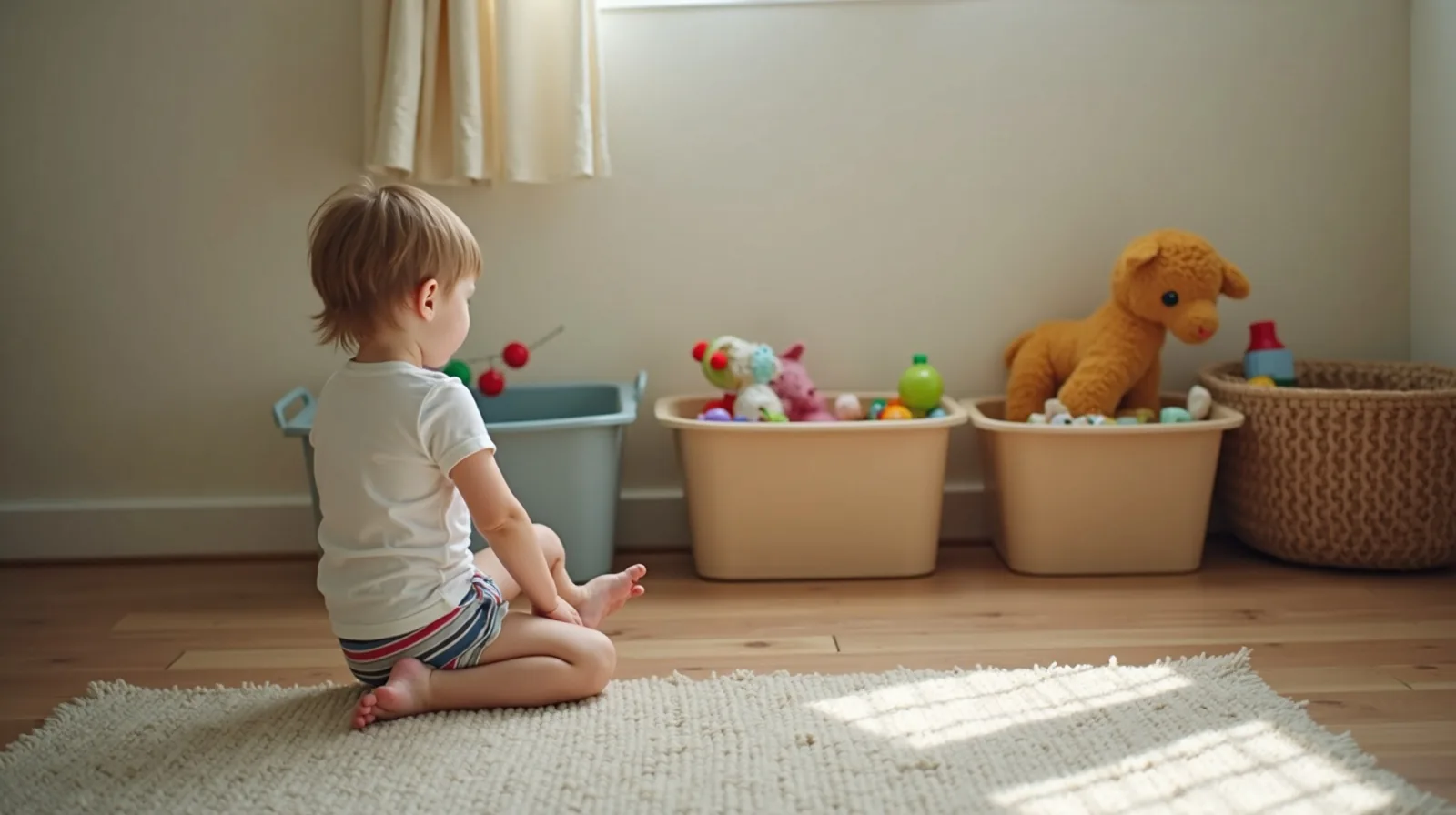
Keep the accessible toys in low, open bins the child can reach and put away themselves, so tidying is something they can actually do.
Make it work in practice
- Keep the everyday favourites out permanently — a beloved lovey, the current obsession — and rotate the rest around them. Rotation isn’t about taking away what a child truly loves.
- Watch what gets used. Toys that never get touched even when available are candidates to pass on — rotation quietly reveals what your child has outgrown.
- Involve the child in swaps as they get older; the “out with these, in with those” ritual is fun and teaches taking care of things.
The clutter payoff
Beyond better play, rotation is one of the most effective clutter controls a family has. Only a fraction of the toys is ever out to be strewn around, so tidying is quick, the room stays calm, and you resist the pressure to keep buying — because rotating what you own already delivers novelty. It also makes it obvious when there’s simply too much: if a full rotation still feels like a lot, that’s a sign to thin the collection.
Counterintuitive as it sounds, putting most of the toys away is one of the best things you can do for a child’s play and your home. Rotate a small set, store the rest, and swap now and then — and you get deeper play, a tidier room, and toys that feel new again, all without spending a cent.