The classic toiletry-bag mistake is packing the bathroom you have instead of the bathroom you need. Three half-used bottles of the same lotion, a full-size hairspray, and a backup backup razor all make the trip, and the bag still manages to leak onto a clean shirt. A few minutes of planning before you pack fixes both problems.
Start with the routine, not the bag
Before anything goes in, run your actual morning and night routine in your head — or better, pay attention for two days at home. Every product you touch gets a note. Then sort the list into three groups:
- Essentials: things you would feel immediately if they were missing, such as a toothbrush, toothpaste, deodorant, and any medication or contact lens supplies.
- Nice to have: things you use most days but could replace or skip for a few days, like a second hair product or a face mask.
- Habit only: things you reach for out of routine and don’t actually need. These stay home.
Hotels, rentals, and many guest rooms already provide soap, shampoo, and a hair dryer. Check what your lodging offers before you buy a travel-size version of something you’ll find in the shower.
Shrink what stays: decant, swap, and use solids
Once you know what’s going, make it small. Buying travel-size versions of everything adds up and creates plastic you throw away. Decanting from the bottles you already own is cheaper and lets you take exactly the amount you need.
- Refillable bottles: small silicone or hard-plastic bottles hold shampoo, conditioner, lotion, and face wash. Label them with a strip of tape so you don’t mistake conditioner for body wash at 6 a.m.
- Solid versions: bar soap, shampoo bars, solid deodorant, and solid sunscreen sticks never leak, don’t count against a liquids limit, and last a surprisingly long time.
- Tiny containers: a pill case or a contact-lens case holds a few days of cream, serum, or cotton swabs. Scrape a dab from the jar rather than hauling the jar.
- Sample amounts: if you only need a product for three nights, three nights of product is the right amount. Calculate a small, generous-feeling portion rather than filling a bottle to the top.
Leak-proof it before it leaks
Leaks aren’t random. They happen when air inside a sealed container expands as cabin pressure drops, pushing liquid out through the cap. A few habits take the pressure away:
- Don’t fill to the top. Leave about a quarter of each bottle empty, so the air has room to expand.
- Squeeze, then cap. With squeezable bottles, press out a little air before closing the lid so there’s less to push back.
- Add a barrier under the cap. A small square of plastic wrap or a piece of tape across the opening, under the lid, is cheap insurance for anything thin and runny.
- Stand bottles upright. Lids facing up, in a pouch that can’t tip over, reduces the chance of gravity doing the leaking.
- Double-bag liquids. Put all liquids in one zip-top bag inside the toiletry bag. If something opens, the damage stays in one place.
Pack it so it’s fast on both ends
A bag with everything loose at the bottom is a bag you dump out on the counter every morning. Packing in order of use makes unpacking and repacking nearly automatic.
- Use a hanging or open-top bag at your destination. If there’s a hook or a flat counter, a bag that opens fully lets you see everything at once.
- Group by task. Teeth items in one small pouch, skin care in another, hair in a third. Grab a pouch, not a handful of loose items.
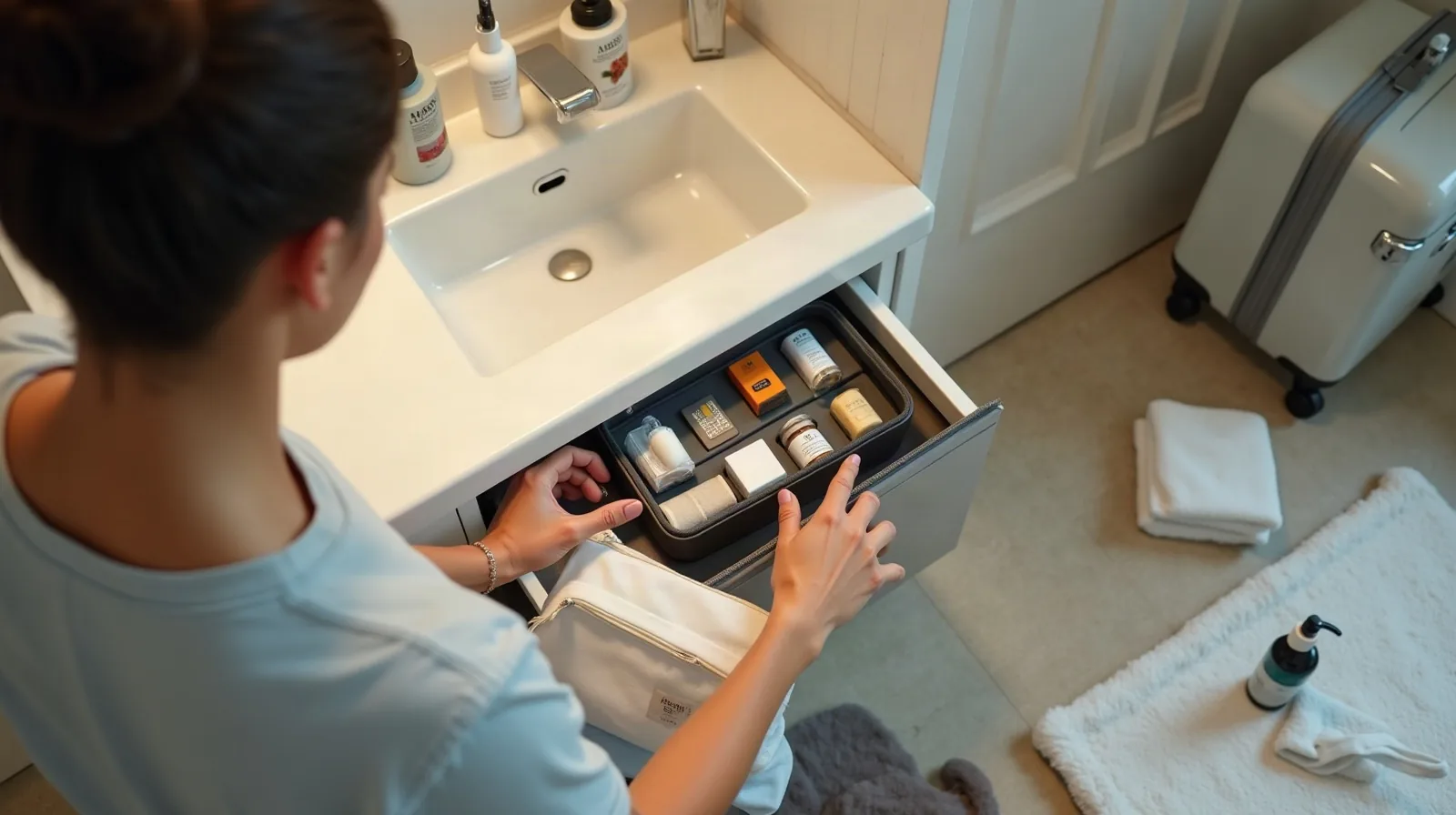
- Keep a ready-packed bag. Store a bag of duplicates of your cheapest items — toothbrush, small toothpaste, deodorant — under the sink. A trip then only needs the add-ons, which cuts the pre-trip scramble to minutes.
- Pack heavier items at the bottom, and anything fragile, like a compact mirror, in the middle of softer items.
Know the liquids rule for carry-ons
For carry-on bags on flights, the standard rule is a one-quart clear bag of liquids, gels, and creams in containers of 3.4 ounces (100 ml) or less. Rules vary by country and can change, so check the airline and airport security guidance before you leave. Solid products, powders, and anything that isn’t a liquid or gel are generally easier. If you’re checking a bag, you can pack larger containers, but the same leak-proofing habits apply — checked bags get tossed around.
Restock when you get home
The last step is the one most people skip. When you return, empty the bag, wash and dry it, and replace anything you used up. Refill the bottles you decanted, throw out anything that leaked or went stale, and zip it shut. The next trip starts from a bag that’s already ready, which is the real hack.