A suitcase looks like one big space until you’re thirty seconds into a search for a phone charger with a plane to catch. The problem usually isn’t how much you packed — it’s that everything went in loose, folded flat, and stacked in the order it happened to come off the bed. Packing cubes fix that, but only if you use them as a system rather than as fancy bags. Treat the suitcase as real estate you zone, and the whole trip gets easier from the first zip to the last, from the first hotel room to the last connecting flight.
Stop packing, start zoning your suitcase
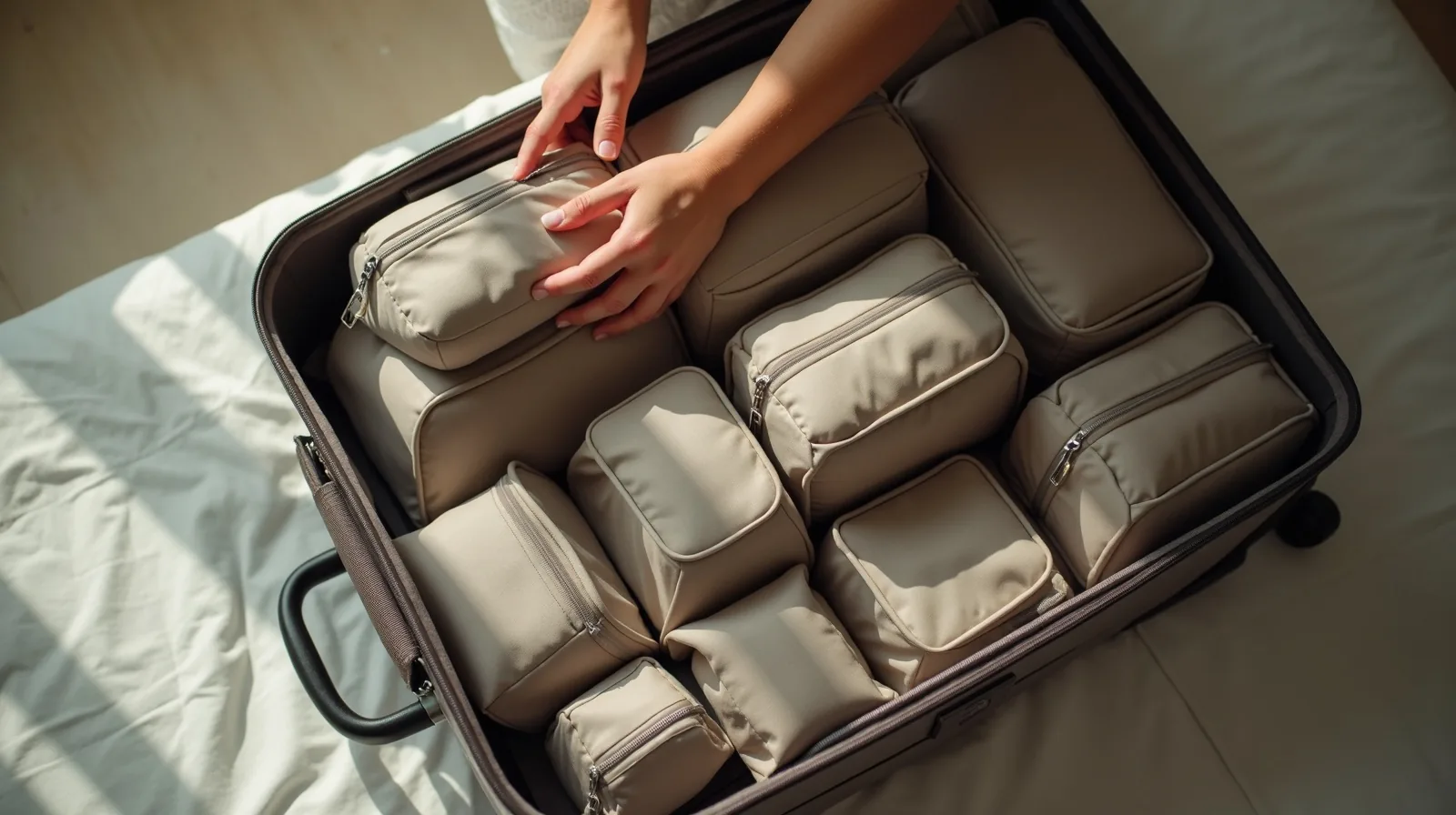
Before anything goes in, picture the suitcase from above, like a floor plan. Each cube becomes a room with one job: one holds tops, one holds bottoms, one holds electronics and cables, one holds toiletries that couldn’t fit in a quart bag. The zoning does the organizing work up front, so you’re never unpacking the whole bag to find a single item — you go straight to its room.
This matters more the longer the trip runs and the more stops it has. A one-hotel trip barely needs the system. A trip with three cities and two modes of transport needs it badly, because you’ll be living out of that suitcase without a dresser to spread things into, and the cubes become the closest thing you have to drawers. It also means you can pack once, at home, with a clear head, instead of repacking under time pressure in a hotel room every couple of days.
Cube taxonomy: by category or by day
There are two competing systems, and either works — pick based on the trip. A category system groups by item type: one cube for tops, one for bottoms, one for underwear and socks, one for exercise or sleepwear. It packs efficiently and suits longer trips where you’ll mix and match pieces across days.
An outfit-day system instead puts one full day’s outfit — top, bottom, underlayer — in a single cube. It’s slower to pack but faster to live out of on a trip with tight mornings, since you grab one cube and you’re dressed. For a family, day-cubes per person also make it obvious at a glance whether tomorrow’s outfit is accounted for.
- Category cubes suit longer, mix-and-match trips where efficiency matters more than speed.
- Day cubes suit short, high-tempo trips where grabbing one bundle beats sorting through a drawer.
- A hybrid works too: category cubes for the bulk of the trip, with one or two spare day-cubes for the first and last mornings.
Compression cubes and the heavy-low, soft-high rule
Compression cubes — the kind with a second zipper that presses the contents flat — buy real space, but they buy it with wrinkles. Save them for items that don’t care about creases: workout clothes, underwear, socks, sleepwear, towels. Reserve a regular, uncompressed cube for anything you’ll want to walk into a room wearing, since compression is exactly what puts the crease in a collared shirt.
Inside the suitcase itself, load like you’re building a wall: heavy, rigid items low and toward the wheels, where the bag’s structure can carry the weight, and soft cubes stacked above where they won’t crush anything. A bag packed top-heavy tips over at baggage claim and packs unevenly; a bag packed bottom-heavy stands up on its own and rolls straight. It also handles better on a curb or a cobblestone street, since the weight sits low where it won’t tug the bag off balance with every bump.
Use the gaps, and keep one cube for the laundry
The corners and edges of a suitcase are where a lot of usable space quietly goes to waste. Shoes belong stuffed with rolled socks or a charging cable coiled inside, then wedged along the wheels or against a side wall, not tossed in loose on top where they dent whatever they land on. Thin items — a phone case, a flat toiletry bag, a paperback — slide into the vertical gaps between cubes instead of riding in their own space.
Reserve one small cube, ideally a different color or fabric than the rest, purely for laundry. As worn clothes accumulate, they go straight into that cube instead of loose into the main compartment, which keeps clean and dirty permanently separated and means the bag never needs a full dump-and-sort to find something wearable. It also means you can leave the suitcase essentially packed for the whole trip — pull a cube out in the morning, put the laundry cube back in at night, and you’re never living out of an exploded bag on the hotel floor. By the last day, that same laundry cube tells you at a glance exactly how much has piled up, which is a useful early warning if you’re trying to avoid an overweight bag at the check-in counter.