
When a home feels short on storage, the instinct is usually to look for more floor space — a bigger closet, more room for bins. But in a small apartment, floor space is exactly the resource you don’t have. What most small units do have, sitting completely unused, is height: several feet of empty wall and ceiling space above where the furniture stops. Shifting the mindset from “more floor” to “more height” is the single biggest unlock for storage in a tight footprint, and most of the moves below don’t cost much or require permanent changes to the apartment.
Go up with shelving
A shelving unit that stops at shoulder height leaves everything above it as wasted air. Tall shelving that runs close to the ceiling uses that same wall footprint far more efficiently — you’re not taking up more floor space than a short unit would, just capturing height that was empty before. Reserve the top shelves for things reached for rarely — seasonal items, spare linens, decorations — since a step stool for an occasional item is a fair trade, while keeping the lower shelves for daily use so nothing you need often requires climbing. A single tall unit in an underused corner can absorb what would otherwise need an entire extra piece of low furniture. If the unit isn’t fixed to the wall, anchor it — a tall, top-heavy piece in a small space is exactly the kind of furniture that benefits most from a simple anti-tip strap, especially in a home with kids or pets moving around it.
Use the doors and walls
Doors and bare walls are storage surfaces most people never think to use, and both are typically renter-friendly with the right hardware:
- Over-door organizers. A hanging pocket organizer on the back of a closet, pantry, or bathroom door adds real storage without touching a wall at all — ideal for shoes, cleaning supplies, or toiletries.
- Wall hooks. A row of hooks by the entry or in a closet catches bags, coats, and accessories that would otherwise pile up on a chair. Adhesive or tension-based options avoid drilling for renters.
- A small pegboard. Especially useful in a kitchen or craft corner, a pegboard turns a flat wall into fully adjustable hanging storage for tools, utensils, or supplies, and it rearranges instantly as needs change.
Renters worried about wall damage have more options than they might expect — removable adhesive strips and hooks rated for real weight, tension rods that wedge into a doorway or alcove without a single screw, and over-door hardware that hangs on the door itself all avoid the security-deposit conversation entirely.
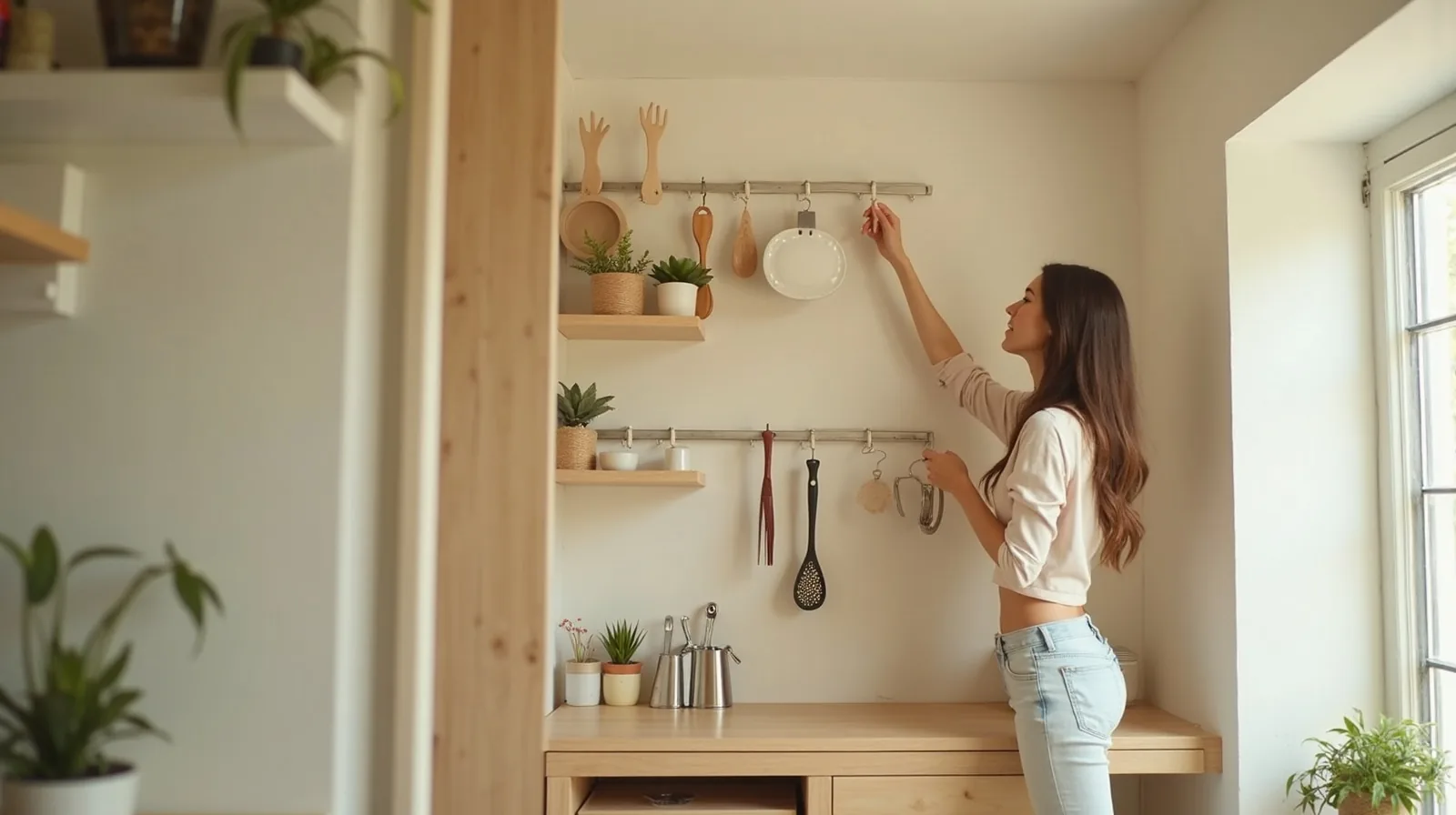
Claim the awkward extra spots
Beyond the obvious walls and doors, a few overlooked spots quietly add up to real capacity. Under-shelf baskets that clip onto the underside of an existing shelf roughly double that shelf’s storage without adding a single new piece of furniture, and they’re especially useful for small loose items that would otherwise slide around. The backs of cabinet doors in a kitchen or bathroom can hold a small rack for lids, spices, or cleaning supplies, often reclaiming the single most wasted space in the room. Above a toilet or above a window, a slim shelf uses vertical space that’s otherwise purely decorative, holding towels, toiletries, or books that don’t need daily reach. None of these are individually dramatic, but stacked together across a small apartment they add up to a meaningful amount of extra capacity. Walk the apartment room by room looking specifically above eye level — it’s an easy habit to skip, since most people scan a room at their own height out of instinct and simply never look up.
Keep it light and intentional
Going vertical can backfire if it just becomes a new place for clutter to pile up out of sight. The goal is deliberate storage, not a taller version of the same problem — keep items on high shelves genuinely infrequent-use, keep hooks limited to what actually gets hung daily rather than becoming a coat pile, and resist filling every inch just because the space exists. A vertical system that’s edited stays legible at a glance; one that’s crammed defeats its own purpose.