
Every decluttering method eventually hits the same wall. The everyday clutter is easy — expired coupons, single socks, chargers to nothing in particular. But a shoebox of old birthday cards, a relative’s chipped teacup, a drawer of concert ticket stubs — those don’t respond to the usual rules, because the real question was never “do I need this.” It’s “what does it mean if I let this go.” That’s a much harder question, and most decluttering advice quietly skips it. Here’s a framework that actually answers it.
Why sentimental items break the usual rules
Most decluttering logic runs on utility: do you use it, does it still fit, does it still work. Sentimental items fail that test on purpose — a wedding invitation was never meant to be useful again. Getting rid of it doesn’t feel like discarding an object; it feels like discarding the memory, the relationship, or the person behind it. That’s exactly why sentimental clutter piles up in the first place. Every item carries a real emotional cost to release, so the path of least resistance is to keep all of it, forever, in a box you never actually open. Somewhere along the way the item stops representing the memory and starts just representing guilt.
The keep-few, capture-most rule
The fix isn’t to feel less sentimental about things — it’s to separate the object from the memory it’s standing in for. A photo, a scan, or a short written note can hold a memory almost as well as the physical item, for everything except a small handful of true heirlooms. So instead of agonizing item by item over keep-or-toss, sort each pile into three groups:
- Keep for real. A tightly limited set that goes into one dedicated box or shelf — the genuine best-of, not everything that’s merely nice.
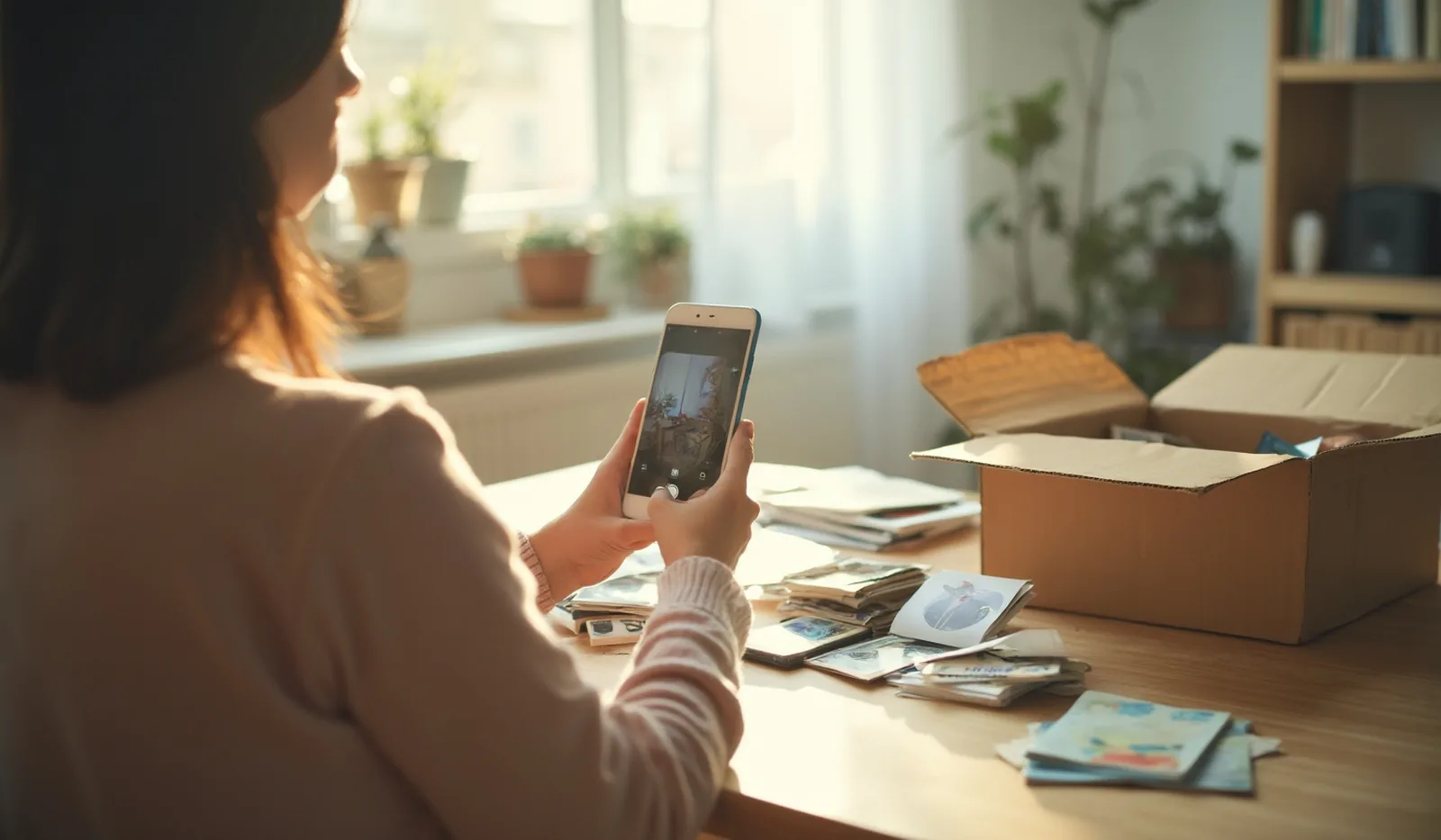
- Capture and release. Photograph or scan the item, jot a line about why it mattered, then let the physical object go.
- Let go outright. No real emotional pull once you’re honest about it — just quietly kept out of habit or obligation.
Photographing something is a legitimate form of keeping it. It preserves the memory you actually revisit — a picture, a story, a detail — while taking up virtually no space at all.
A twenty-second test for anything that won’t sort itself
When an item resists an easy call, run it through a few honest questions:
- Would you grab this in an emergency, without even thinking about it?
- Does looking at it bring the memory back, or has it quietly become part of the background clutter?
- Are you keeping the object, or keeping the guilt of getting rid of it?
- Could a photo of this do ninety percent of what the object itself does?
Answering those honestly usually sorts an item in seconds — the hesitation itself is often the real answer.
Where this shows up most
The framework is the same everywhere, but a few categories deserve specific notes:
- Cards and letters. Keep a slim handful that genuinely move you. For the rest, photograph the pages worth rereading, then recycle the paper — you’re keeping the words, not the envelope.
- Gifts you never use. Guilt isn’t the same as obligation. Passing an unused gift on to someone who’ll actually enjoy it honors the giver’s intent far more than storing it unopened in a closet ever does.
- Inherited and family items. It’s genuinely fine to keep only the few pieces that carry real meaning for you, rather than everything that once belonged to someone. Photograph the rest, and offer pieces you’re releasing to other family members before letting them go for good.
- Clothing and memorabilia. A drawer of old T-shirts or a box of outgrown baby clothes rarely needs to survive intact. Keep a few genuine favorites, and consider having a handful of the rest turned into one small keepsake — a quilt square, a framed piece — instead of storing a whole bin indefinitely.
Make the one box the limit
Give the “keep for real” pile a hard container — one labeled box, one shelf, nothing more. Once it’s full, adding something new means taking something out. That fixed limit does the ongoing work a single big cleanout never can: it keeps forcing you to compare a new item against your actual best-of, instead of letting the pile quietly grow forever. A box with a ceiling stays meaningful. A box with no ceiling just becomes storage for guilt.
Sentimental clutter isn’t a willpower problem, and it was never really about the objects. Separate the memory from the item, give yourself permission to capture instead of keep, and set a real limit on what physically stays. You’ll end up with a small, honest collection of things that actually mean something — instead of boxes of things you’re afraid to open.