A long-haul flight in economy is uncomfortable by default — a fixed seat, recycled air, and hours with almost no room to move — but very little of what makes it bearable requires more than a personal item. A short comfort kit, a deliberate seat choice, and a plan for sleep and movement do more for how a long flight feels than anything money can buy at the gate.
The comfort kit that fits under the seat
A handful of small items, packed together and easy to reach, cover most of what makes a long flight uncomfortable: a neck pillow that actually supports the head rather than just decorating it, an eye mask, earplugs or noise-cancelling headphones, and a pair of compression socks to keep blood from pooling during hours of sitting still. Add a light layer — cabin temperature swings more than most people expect — lip balm for the dry air, and a refillable bottle to fill after security. Pack the whole kit as its own small pouch inside the personal item rather than scattered loose, so it comes out and goes back in as a single unit at the start and end of the flight.
- A neck pillow and eye mask matter most on overnight or red-eye flights where actual sleep is the goal.
- Compression socks reduce swelling and stiffness on any flight over roughly four hours, regardless of whether you sleep.
- A refillable bottle filled after security beats waiting on an infrequent drink cart for staying hydrated through a long cabin.
Choosing a seat strategically
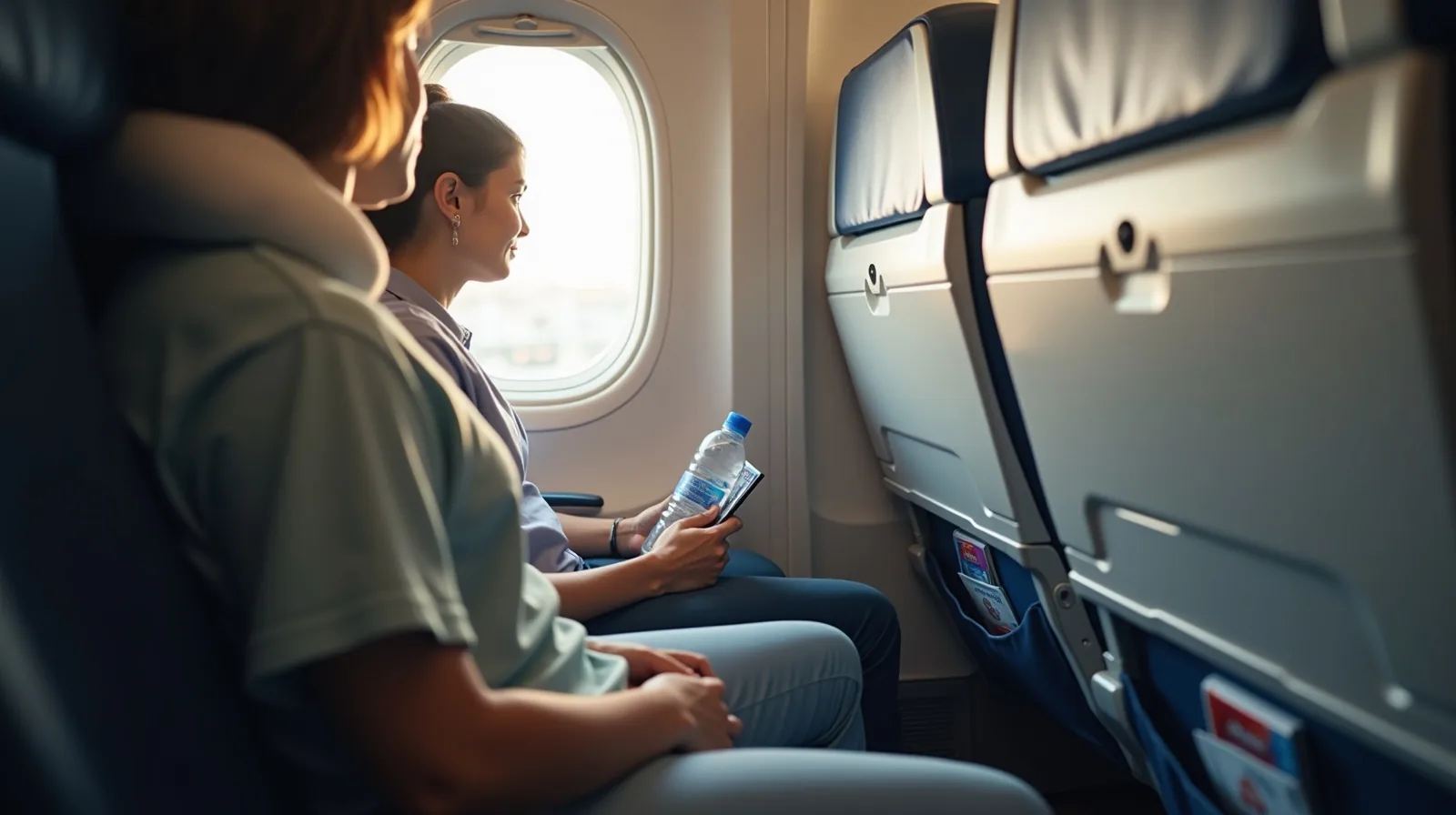
Seat choice shapes the whole flight more than almost any other decision. A window seat offers something to lean against and control over the shade, at the cost of climbing over a neighbor to reach the aisle; an aisle seat trades that convenience for easier access to the bathroom and the overhead bin, at the cost of getting bumped by the cart and passing traffic. An exit row or a seat marked with extra legroom, often available for a modest upgrade fee at booking or check-in, matters more on a long flight than almost any other single purchase, since a few extra inches of legroom compounds over eight or ten hours in a way it never does on a short hop.
Seat-mapping tools and airline apps often show more detail than the booking page itself, including which rows sit near a galley or bathroom — useful to know, and worth avoiding on an overnight flight where foot traffic and light can interrupt sleep repeatedly through the night.
Move and hydrate to fight stiffness and swelling
Sitting still for hours slows circulation, particularly in the legs, and is the main cause of the stiffness and mild swelling that make deplaning feel worse than boarding did. Get up and walk the aisle roughly once every couple of hours if the seatbelt sign allows it, and while seated, flex the ankles and shift position regularly rather than staying locked in one pose. Cabin air runs noticeably drier than air at ground level, which dehydrates faster than it feels like it should; drinking water steadily through the flight, rather than only when a cart happens to pass, does more for how you feel on arrival than almost anything else on this list.
A sleep plan, light management, and an organized seat-back
Decide before boarding whether the goal is to sleep on this flight or stay awake for it, based on the arrival time and how quickly you need to adjust to the new time zone, and commit to that plan rather than dozing on and off. If the goal is sleep, put the eye mask on early and keep the window shade down before your body has fully adjusted to a bright cabin, since even the light through your eyelids delays the shift into rest. If the goal is to stay awake, keep the shade up and the light in, and use it to nudge your body clock toward the destination’s time zone.
Keep the seat-back pocket organized the moment you sit down — headphones, a water bottle, and anything else you’ll want more than once in one spot — rather than digging through a bag stowed overhead or under the seat in front every time you need something. A little organization at boarding saves a dozen small disruptions to yourself and your row-mates over the course of the flight, and it means the one bag you keep at your feet can stay mostly zipped and out of the way until landing.