
Paper clutter feels like a volume problem — too much mail — but it’s really a decision problem. Very little mail actually needs keeping; the pile forms because each piece arrives, you don’t want to deal with it right then, so you set it down “for later.” Later never comes, more mail lands on top, and within a week the counter has a paper mountain hiding a bill you needed to pay. The fix isn’t more storage — it’s making the decision immediately, so mail never gets a chance to pile up.
Triage the moment it arrives
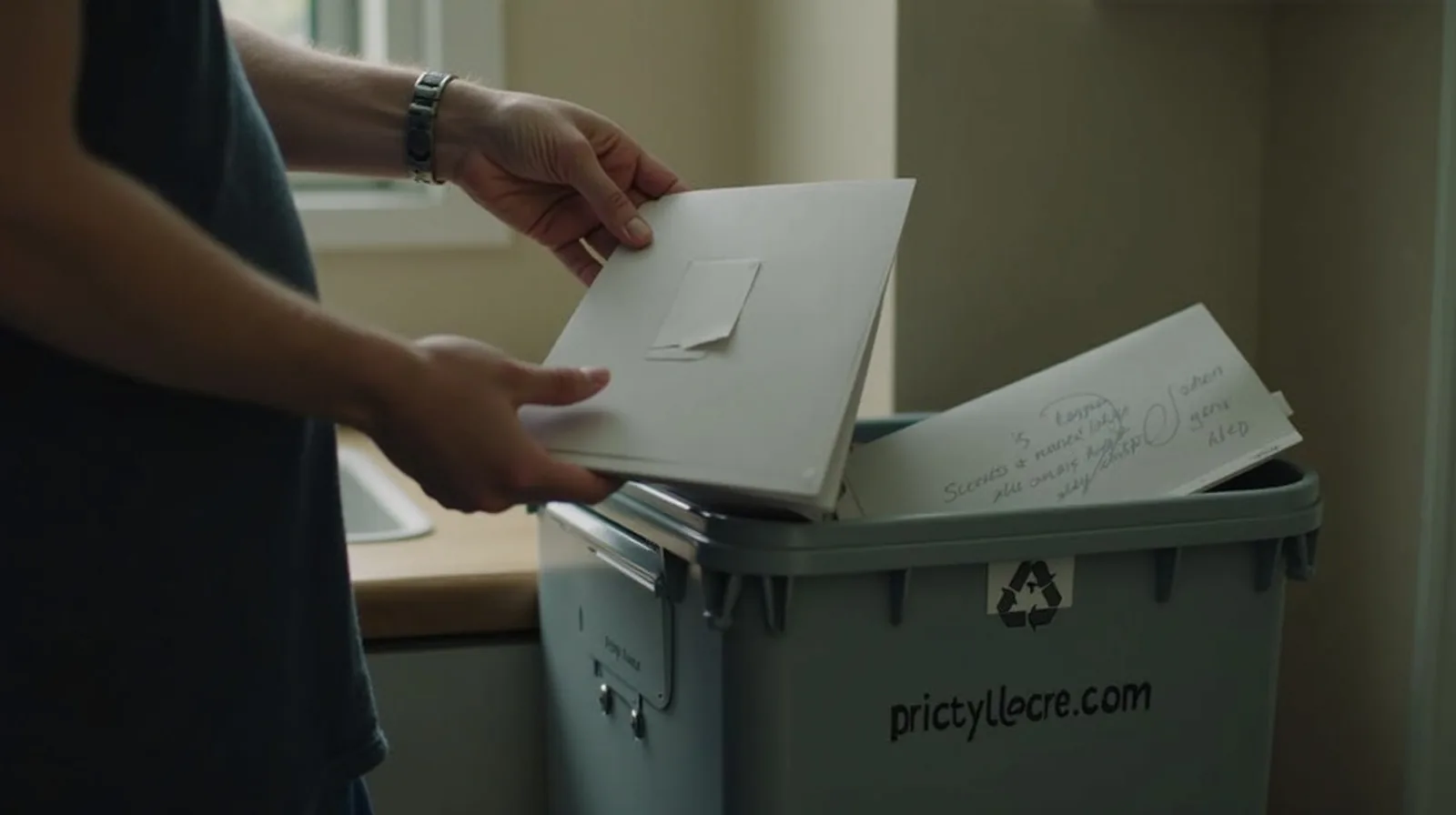
Handle mail once, standing over the recycling bin, sorting each piece into one of three fates:
- Recycle now. The vast majority — junk, flyers, catalogues, envelopes you’ve emptied — goes straight into the bin before it ever touches a surface. This alone kills most of the pile.
- Act on it. Bills to pay, forms to return, anything with a deadline goes into a single dedicated “action” spot — one tray or folder — not scattered around. This is the small pile you deliberately keep visible.
- File it. The few documents worth keeping (statements you need, warranties, records) go to where they’re filed — not left out.
The key is that this happens immediately, ideally the moment you bring the mail in. Sorting once, at the door or over the bin, is the entire system.
Give “action” mail a home and a rhythm
The action items are where things still go wrong, because a bill in a tray can be ignored as easily as one on a counter. Two habits close the gap: keep the action tray in a spot you see regularly, and set a recurring time to clear it — a weekly ten minutes to pay, respond, and empty it. A predictable rhythm means nothing with a deadline sits long enough to become a problem, and the tray never overflows.
Turn off the tap: go paperless
The most powerful move against paper clutter is to stop it arriving in the first place. Switch bills and statements to electronic delivery wherever you can, and opt out of junk mail and catalogues you never read. Every piece you stop receiving is one you never have to triage. It takes a little setup, but it permanently reduces the flow — the less mail comes in, the less system you need.
Keep the filing simple
For the small amount worth keeping, an elaborate filing system is its own kind of clutter. A few clearly labelled folders (or a single scan-and-shred habit for going digital) is plenty. Periodically purge what you no longer need — old statements and expired documents — so the “keep” pile doesn’t quietly become another backlog.
Mail clutter ends the moment you stop postponing the decision. Sort every piece once as it arrives — recycle the junk, corral the action items, file the keepers — give the action tray a weekly clear-out, and cut the incoming flow by going paperless. Do that and the paper mountain simply never forms.