Grocery advice usually starts and ends with coupons, which is a shame, because coupons are one of the least effective ways to spend less. They reward you for buying things you might not have bought, in brands you might not prefer, at a discount a store brand often beats anyway. The habits that genuinely move a grocery bill are quieter and more structural — and unlike coupons, they work automatically, every single week, without you thinking about them.
Shop your kitchen before the store
The most expensive grocery item is the one you already own and buy again because you forgot it was there — and then it expires and gets thrown out. Before any trip, spend two minutes looking through the fridge, freezer, and pantry, and build your list around what needs using up. Starting from what you have, instead of a blank page, quietly erases the biggest source of waste there is: food you paid for twice, or paid for and binned.
Go in with a list and a loose plan
A list isn't about discipline for its own sake — it's about removing decisions, because every unplanned decision in a store is an opening for an impulse buy, and stores are engineered to create those openings. A rough plan for the week, even just “five dinners and a couple of lunches,” turns a wandering trip into a targeted one. Plan a few meals that share ingredients, too, so a bunch of herbs or a bag of rice gets fully used instead of half-wilting in the drawer.
Learn the unit price, ignore the sticker
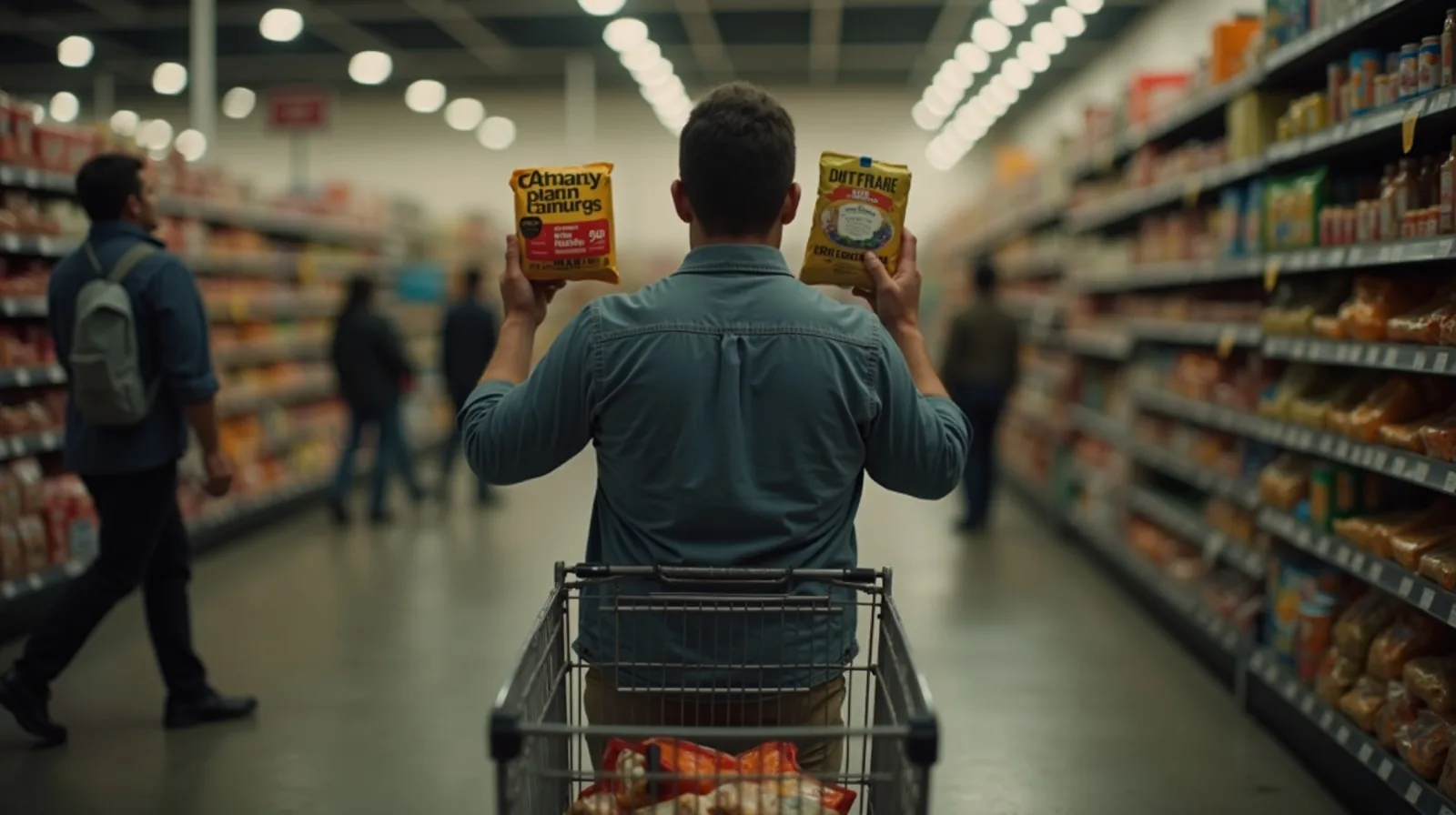
The big number on the shelf tag is the price; the small number tucked in the corner is the price per ounce or per pound — and that's the one that tells the truth. A bigger package isn't automatically cheaper, and a “sale” isn't automatically a deal. Training your eye to find the unit price makes comparison instant and immune to marketing. It's the closest thing to a cheat code the grocery store has.
Give store brands a real audition
For staples — flour, canned beans, frozen vegetables, spices, cleaning supplies — the store-brand version is frequently made in the same facilities as the name brand and costs meaningfully less. You don't have to love every one. Run a few blind experiments on the things you buy most, keep the ones you genuinely can't tell apart, and let the savings compound week after week. For most pantry basics, the difference is the label.
Waste less of what you already bought
Spending less is only half the equation; wasting less is money you've already spent. A few habits stretch a haul:
- Freeze the tipping point. Bread, herbs, cooked grains, and most proteins freeze well. If something's about to turn, the freezer is a pause button.
- Keep a “use it up” shelf. Put the soonest-to-expire items at eye level so they get eaten first.
- Cook once, eat twice. Deliberate leftovers are the cheapest lunch you'll ever pack.
Two small levers with outsized effects
Finally, don't shop hungry — an empty stomach turns every aisle into a suggestion — and shop a little less often. Each trip carries an “impulse tax,” and one well-planned weekly shop beats four quick top-ups that each end with three unplanned things in the basket.
None of this asks for spreadsheets, extreme frugality, or giving up the food you like. It's a handful of defaults — check before you shop, buy on unit price, waste less — that lower the bill quietly and permanently. The coupons can be a small bonus on top; they were never the strategy.