

A lot of household chaos isn’t really a mess problem — it’s an information problem. Nobody knows whose turn it is to bring the snack, where the permission slip went, or whether Tuesday is the late practice day. A command center solves this by giving the whole household one shared place to look, instead of everyone carrying a slightly different version of the schedule in their head. It doesn’t need to be elaborate or expensive — the households that stick with one tend to keep it simple enough that setting it up takes an afternoon, not a weekend.
Pick the spot everyone already passes
A command center only works if it lives somewhere people walk by daily without having to detour for it — near the main entry, by the kitchen doorway, or along a hallway everyone crosses on the way out. Tucking it into a spare room or a rarely used wall guarantees it gets checked once a week instead of every day. The location does more work than the organizing products you put on it, so choose high-traffic real estate even if it means giving up a little wall space you’d rather use for something else. If no single wall is big enough for everything, it’s fine to split the setup across an adjacent stretch — the calendar on one section and the hooks or mail tray just around the corner — as long as it’s all still within the same few steps of foot traffic.
A shared calendar at the center
The anchor of the whole setup is a visible wall calendar big enough to write on without cramming. A shared calendar that everyone can glance at solves the classic problem of one person’s digital calendar not syncing to anyone else’s attention. Color-coding each family member’s entries makes it readable at a glance — a quick look tells you whose week is busy without reading every line. Keep a marker tied or clipped right there, since a calendar that requires a hunt for a pen quietly stops getting updated within a month. A monthly view works for most families, but if evenings are especially packed, a small weekly strip alongside it — even a simple whiteboard row — can carry the day-by-day detail the monthly grid doesn’t have room for.
A landing spot for each person
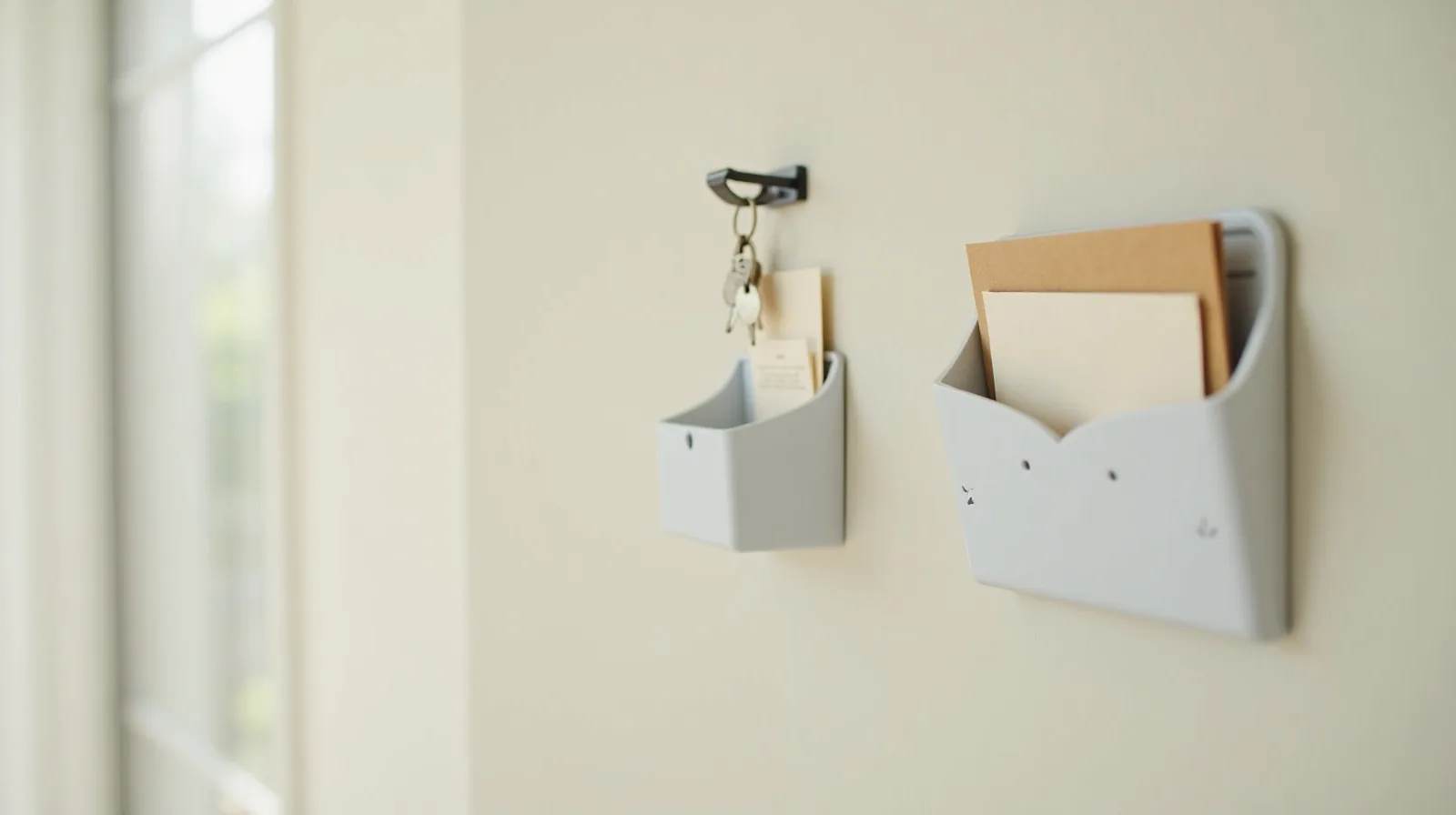
Bags, keys, school folders, and gym bags all need somewhere specific to go, or they end up scattered across the kitchen counter, the couch, and the floor by the door in roughly equal measure. A row of hooks or a small labeled bin per person gives each item a genuine home. The rule that makes this stick is simple: the spot is used the moment someone walks in, not “later.” A hook that’s two steps out of the way gets skipped; one that’s directly in the path from the door gets used automatically. For younger kids, a hook mounted at their own height, not an adult’s, makes a real difference — it’s far easier to build the habit when they can reach it without help every single time.
Mail, meals, and the launchpad
Round out the command center with a few more zones that catch the household’s other daily inputs:
- An incoming-mail tray or wall pocket. Mail gets triaged the moment it’s set down instead of forming a pile on the counter.
- A meal-plan and to-do zone. A small whiteboard or notepad section for the week’s dinners and a running errands list keeps both out of everyone’s heads.
- A launchpad by the door. A shelf or basket for things that need to leave the house tomorrow — library books, signed forms, a return package — so they’re impossible to forget on the way out.
The system only stays useful if it stays current, so build in a two-minute weekly reset — a Sunday evening glance to clear stale notes, update the calendar, and empty anything sitting in the launchpad that should have left already. A command center that’s three weeks out of date is worse than no command center at all, since nobody trusts it enough to check. It helps to make the reset a shared moment rather than one person’s chore — even a few minutes with the whole family gathered around the wall gets everyone looking at the same information at the same time, which is really the whole point of having a command center in the first place.