Watch what happens the moment anyone walks in the front door: keys go down somewhere, a bag gets dropped, the mail lands on the nearest flat surface, shoes come off in the middle of the floor, and a jacket drapes over a chair. Do that a few times a day for a week and the entryway becomes the messiest, most stressful spot in the house — and the place where you lose ten minutes every morning hunting for your keys. The reason is simple: nothing by the door has a designated home, so everything just lands. A purpose-built drop zone fixes it at the source.
Why the entryway is always a mess
The front door is a natural collection point — it’s where the outside world’s stuff (mail, packages, bags) enters and where your daily-carry items (keys, wallet, sunglasses) get set down on the way in and grabbed on the way out. When there’s no system, all of that piles onto whatever surface is nearest, and because it’s the first and last thing you see each day, the clutter feels bigger than it is. The goal isn’t to have less stuff by the door — it’s to give each thing a specific place to land.
Build the drop zone
Set up a small station right where people naturally unload, giving every category a home:
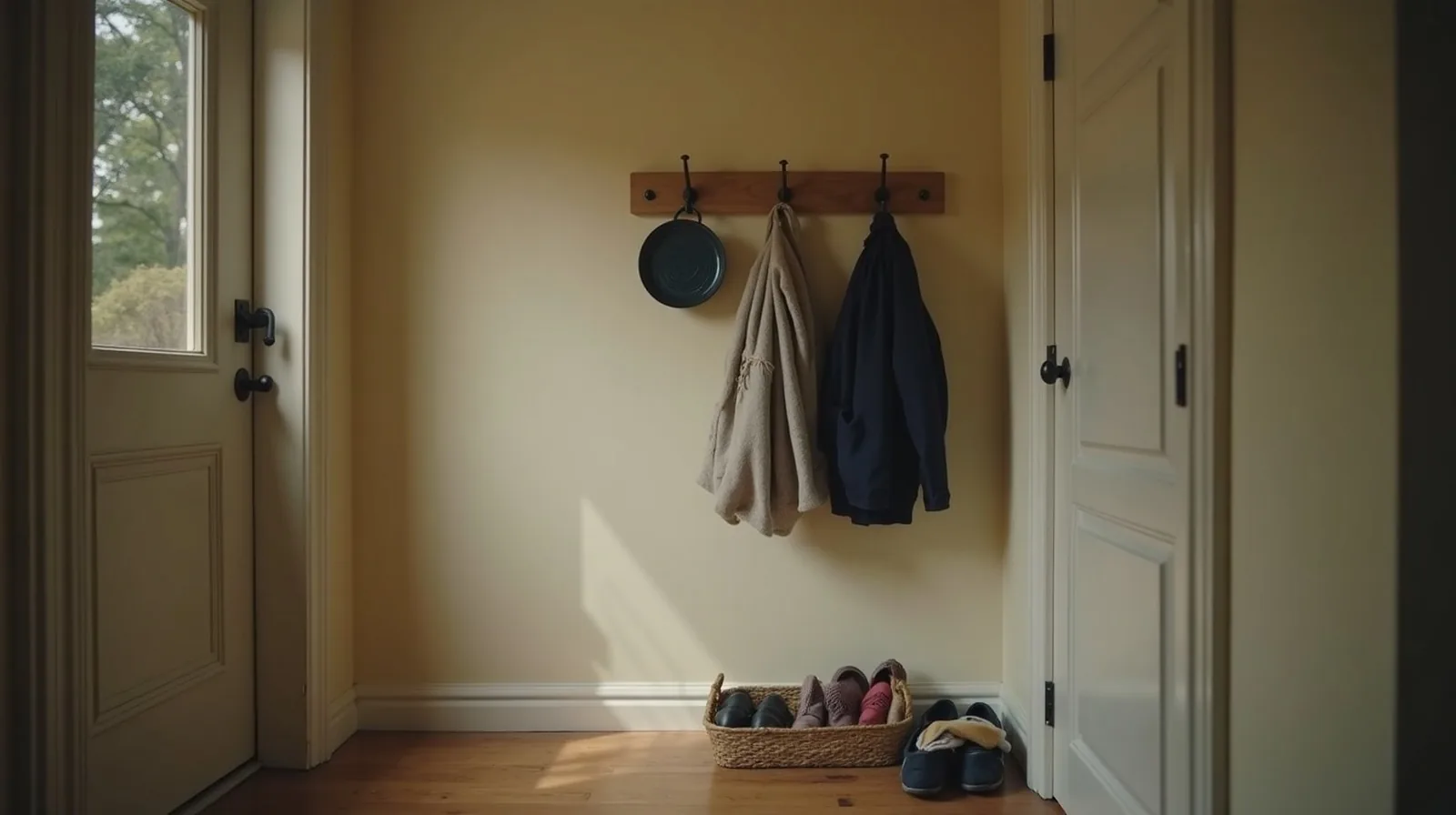
- Hooks for bags and jackets. A row of wall hooks is the single highest-value addition — bags and coats go up instead of on the floor or a chair.
- A tray or small dish for keys and daily-carry. One dedicated spot for keys, wallet, sunglasses, and pocket clutter ends the morning key-hunt entirely.
- A basket or rack for shoes, so they’re contained in one place rather than scattered across the floor.
- A landing spot for mail and packages — a small tray or basket — so paper doesn’t migrate onto the kitchen counter (with a plan to actually process it; letting it pile here just relocates the problem).
- A charging spot, if this is where phones land, so they’re not strewn around.
You don’t need much space — a few hooks, a slim shelf, and a basket work even in a tiny hallway.
The habits that make it stick
The station only works if using it becomes automatic, which it will if it’s genuinely convenient:
- Make the right thing the easy thing. Put the key tray exactly where your hand naturally goes, the hooks right at the door. If the system takes more effort than dropping things, the pile wins.
- Reset it in ten seconds. A quick tidy of the zone as you pass keeps it from creeping back into chaos.
- Get everyone using it. A drop zone works for a household only if each person has a hook and knows where things go — assign hooks and baskets so it’s obvious.
Keep the paper moving
The one thing that can quietly wreck a drop zone is mail, because paper accumulates fast. Give it a strict limit — a small tray that you clear regularly, recycling junk immediately — rather than letting the entryway become a paper mountain. (A dedicated system for processing mail deserves its own routine.) Keep the zone for landing and grabbing, not long-term storage.
The entryway pile-up isn’t a discipline problem — it’s a design problem. Give keys, bags, shoes, and mail each a specific, convenient home right by the door, and the daily clutter stops forming on its own. You walk in, everything lands where it belongs, and you walk out the next morning without hunting for a thing.