Most suitcase shopping happens the same way: you stand in an aisle, roll a few candidates back and forth, and pick whichever one looks sturdiest or happens to be on sale. That's not entirely wrong, but it skips the handful of real decisions buried in every suitcase — decisions that determine whether the bag survives five years of travel or falls apart after two. None of them are about brand. They're about shell material, wheel type, size class, and a few construction details that are easy to miss under store lighting and easy to regret at baggage claim.
Hardside or softside: the trade-off you're actually making
A hardside suitcase — a rigid polycarbonate or ABS shell — protects what's inside from crushing and from the elements. Rain beads off it, and a strap around a bulky sweater or a bottle of wine has a far better chance of arriving intact than it would in a bag that just gets squeezed by whatever's stacked on top of it. The trade-off is flexibility, in both senses: the shell won't give if you've slightly overpacked, and the outside offers nowhere to clip anything or add an external pocket. Scuffs also show more, since a glossy hard shell scratches visibly where a fabric bag just fades.
A softside suitcase — heavy nylon or polyester over an internal frame — gives you exterior pockets for the things you want without opening the whole bag, and it flexes enough to squeeze into a tight overhead bin or an oddly shaped trunk. That same give is the weakness: soft sides don't protect fragile contents nearly as well, and the fabric itself is what eventually wears through at the corners and the base, the two spots that take the most abuse getting dragged across curbs and loaded into cars.
Neither one is the "better" suitcase. If you check bags and want peace of mind about what's inside, or you travel somewhere wet, hardside wins. If you value exterior pockets, expect to gate-check on small regional flights, or need a bag that compresses a little to fit an awkward space, softside wins.
Spinner wheels or two-wheel: pick your terrain
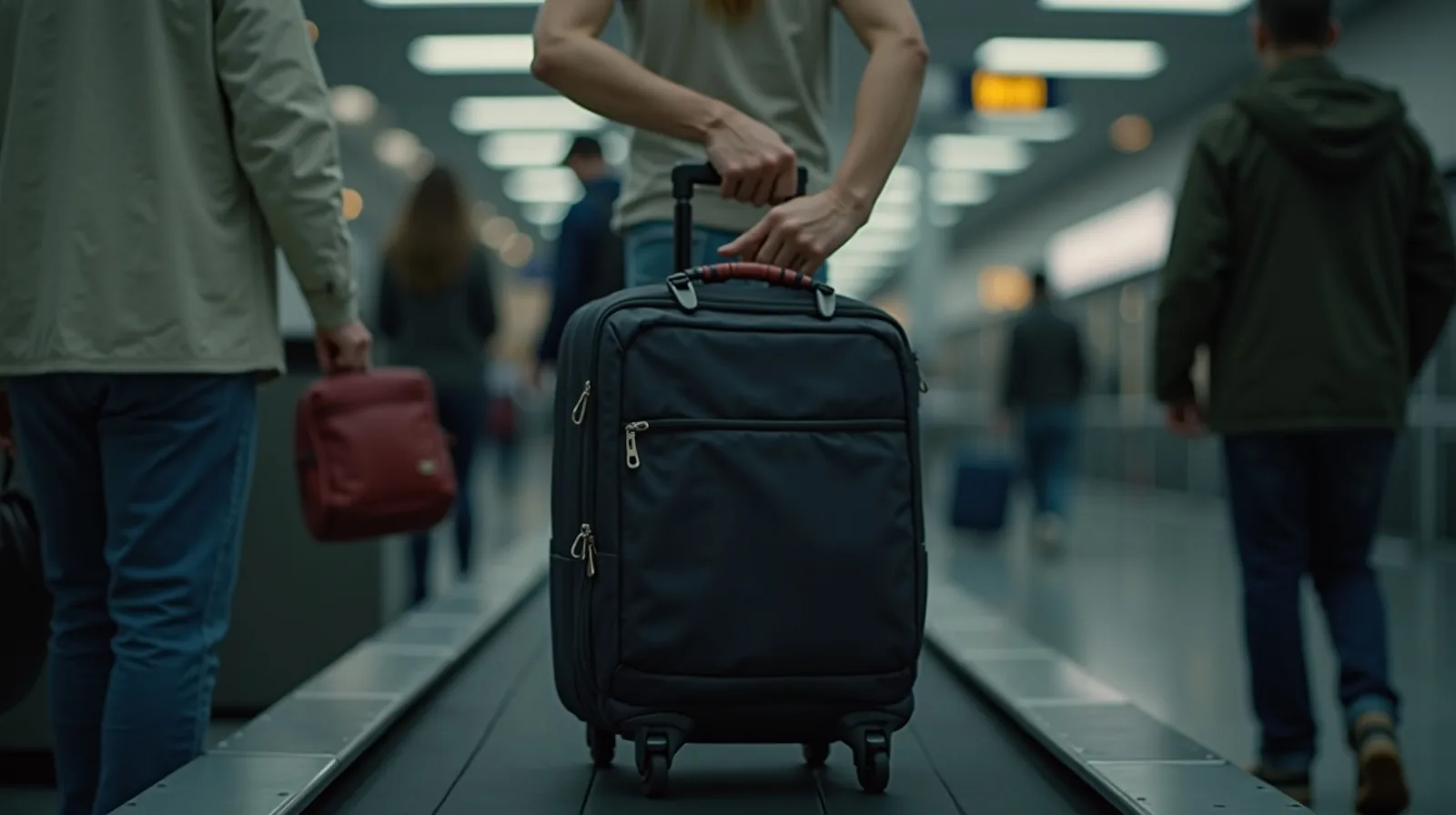
Four-wheel spinners roll upright and turn in any direction with barely a push, which is exactly why they've taken over the luggage aisle. On smooth, flat airport flooring, a spinner glides beside you with one finger, and it never has to be tipped back onto two wheels the way older bags do. The catch is that four wheels also means four points that can snap off, jam, or pick up grit, and a spinner has no natural way to stay put on a slope — it'll roll away from you on a ramp or a sidewalk with any grade at all.
Two-wheel, or inline, suitcases have to be tilted back and pulled, which is more effort on a flat concourse but far more stable everywhere else: cobblestones, gravel lots, a sloped driveway, a train platform edge. There are also just two wheels to eventually fail instead of four, and they tend to be bigger and more rugged, since they're built to be dragged rather than rolled smoothly.
If most of your travel is airport-to-hotel on paved, indoor surfaces, a spinner is genuinely easier to live with. If you travel somewhere with rougher terrain, older cities, or a lot of curbs and stairs, a two-wheel bag will survive it better and won't go rogue on every incline.
Sizing it to airline reality
Luggage is sold in three rough size classes, and it's worth knowing which one you're actually buying before you're at the gate arguing about it. A personal item is small enough to go fully under the seat in front of you — think a large backpack or a soft tote. A carry-on is the size that fits in an overhead bin, generally in the neighborhood of 20 to 22 inches tall including wheels and handles, though the exact limit varies enough by airline that it's worth checking the specific number before you fly, especially on budget or regional carriers. A checked bag runs larger still, typically in the high 20s to low 30s in height, sized around what most airlines will accept before charging an oversize fee.
Buy for the trips you actually take, not the trip you're imagining. If nine trips out of ten are carry-on-only and the tenth is a two-week haul, it's usually cheaper and easier to own one reliable carry-on and rent or borrow a larger bag for that rare exception than to lug a checked-size suitcase around for short trips it was never built for.
Expansion zippers: extra room you don't pay for until you need it
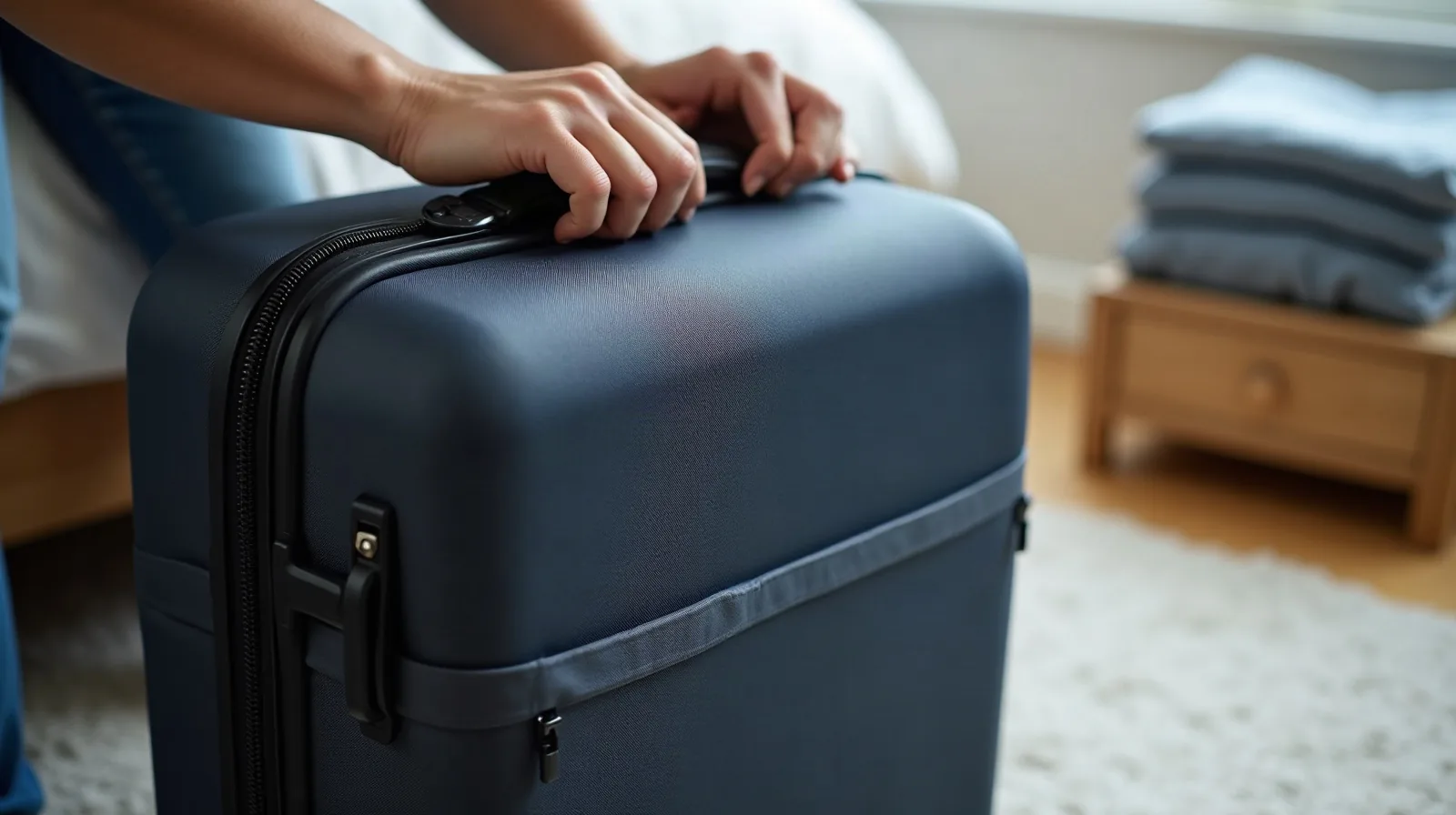
A lot of carry-on and midsize suitcases include a second zipper running around the perimeter that, once opened, lets the whole bag expand by an inch or two of depth. It's one of the more genuinely useful features in modern luggage: packed flat for the flight there, unzipped for the souvenirs and extra layers on the way back, with no need to sit on the bag to force it shut.
The catch worth knowing before you rely on it: an expanded bag is bigger than its stated dimensions, and some airlines measure carry-on sized bags at the gate. A carry-on that fits the sizer when packed flat can fail it once expanded. Treat the expansion zipper as a buffer for checked bags or for the trip home, not as extra capacity you plan to fly out with on a size-restricted carry-on.
The durability details easy to miss in the store
A few small construction choices predict how long a suitcase actually lasts, and none of them show up on the price tag. The telescoping handle should extend and retract smoothly with genuinely no wobble at full extension — give it a firm shake fully extended in the store, since a handle with play in it now will only get looser. Wheels bolted through a reinforced housing hold up far longer than wheels riding on a thin plastic post; you often can't tell without turning the bag over, but it's worth a look. Zippers matter more than shoppers expect, since a blown zipper effectively ends a suitcase's life regardless of how sound the rest of it is — heavier, chunkier teeth generally outlast fine ones.
A built-in combination lock recognized by airport security is worth having on a checked bag; a bag without one just means carrying a separate lock, one more thing to lose. And a genuine manufacturer warranty, ideally multiple years and covering wheels and zippers rather than just the shell, is one of the better signals that whoever built the bag expects it to survive real travel rather than a few trips to the closet and back.
Matching the suitcase to how you actually travel
A frequent flier who lives out of carry-ons benefits most from a light hardside spinner with a rock-solid handle and wheels rated for daily wear — the bag that gets used every week is the one where small annoyances compound fastest. An occasional vacation traveler can get away with a heavier, cheaper build, since a suitcase used three times a year has far less to survive. A family checking one large shared bag should lean toward a two-wheel or hybrid design with real expansion room, since that bag is doing the job of several people's overflow at once. And anyone flying into rougher terrain — cobblestones, unpaved lots, a lot of stairs — is better served by two wheels and a tougher shell than by a spinner that looks effortless only on smooth airport tile.