
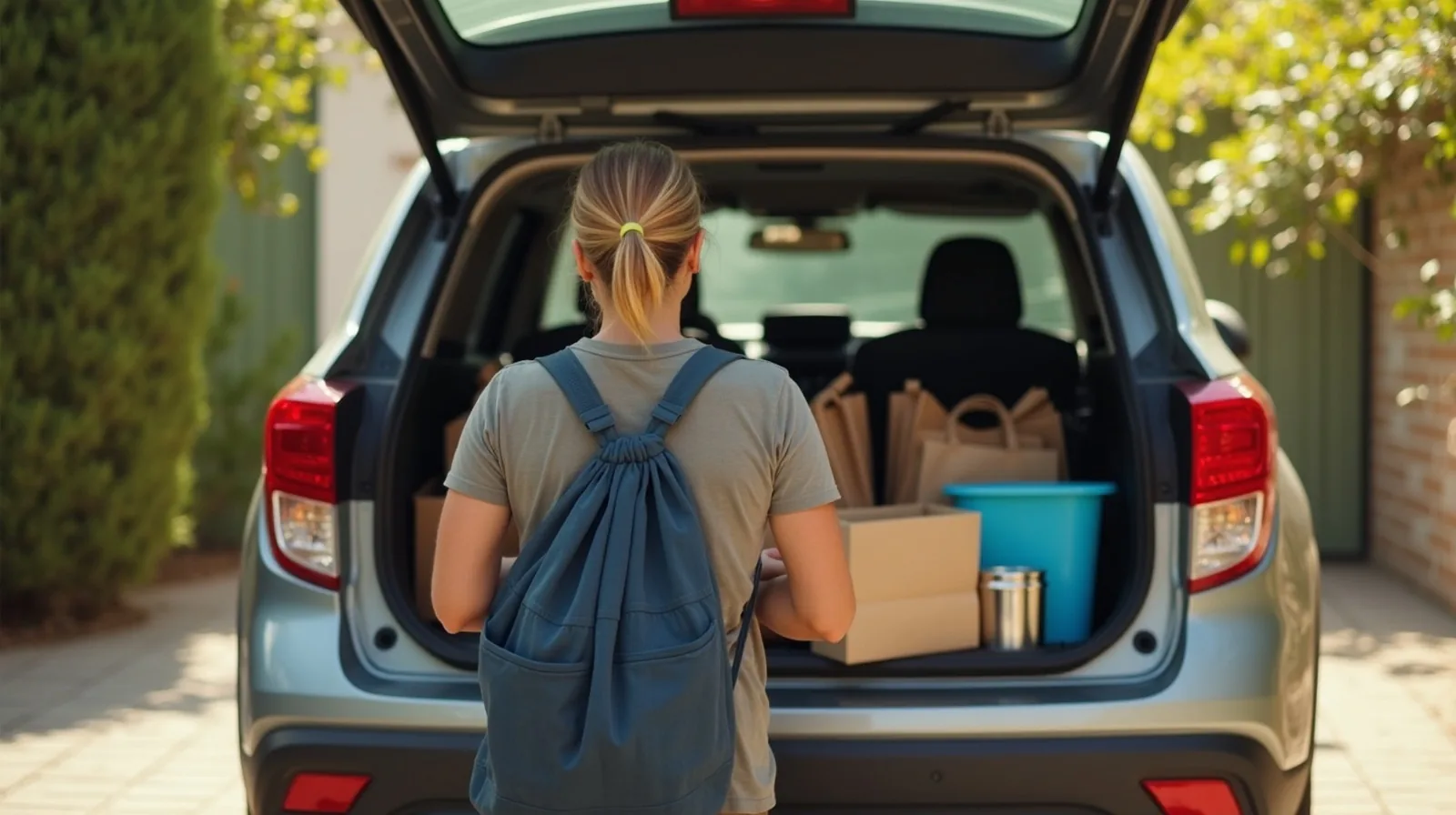
A car accumulates clutter almost without anyone deciding to put it there — a coffee cup that never made it to the trash, a jacket tossed in the back seat, receipts sliding under the mats. None of it feels like a big deal in the moment, but it compounds fast, and a car that’s a rolling junk drawer makes every errand and every passenger a little more annoying than it needs to be. A proper reset, followed by a system that’s actually easy to maintain, fixes it for good — and unlike most home organizing projects, the whole thing can realistically be done in an afternoon.
Do the reset first
Before setting up any system, empty the car out completely — every door pocket, the glovebox, under every seat, and the full trunk. Sort what comes out into three honest piles: trash (most of it, if it’s been building up a while), belongs elsewhere in the house (that stray charger, that library book), and actually belongs in the car. Wipe down the surfaces while everything’s out — it’s far easier with an empty cabin than trying to work around a pile. This reset is the part that makes the system below feel worth maintaining, because you’ll actually notice the difference. It’s also a good moment to vacuum under the seats, where loose change, old receipts, and stray snack wrappers tend to collect out of sight for months at a time.
Zone the trunk
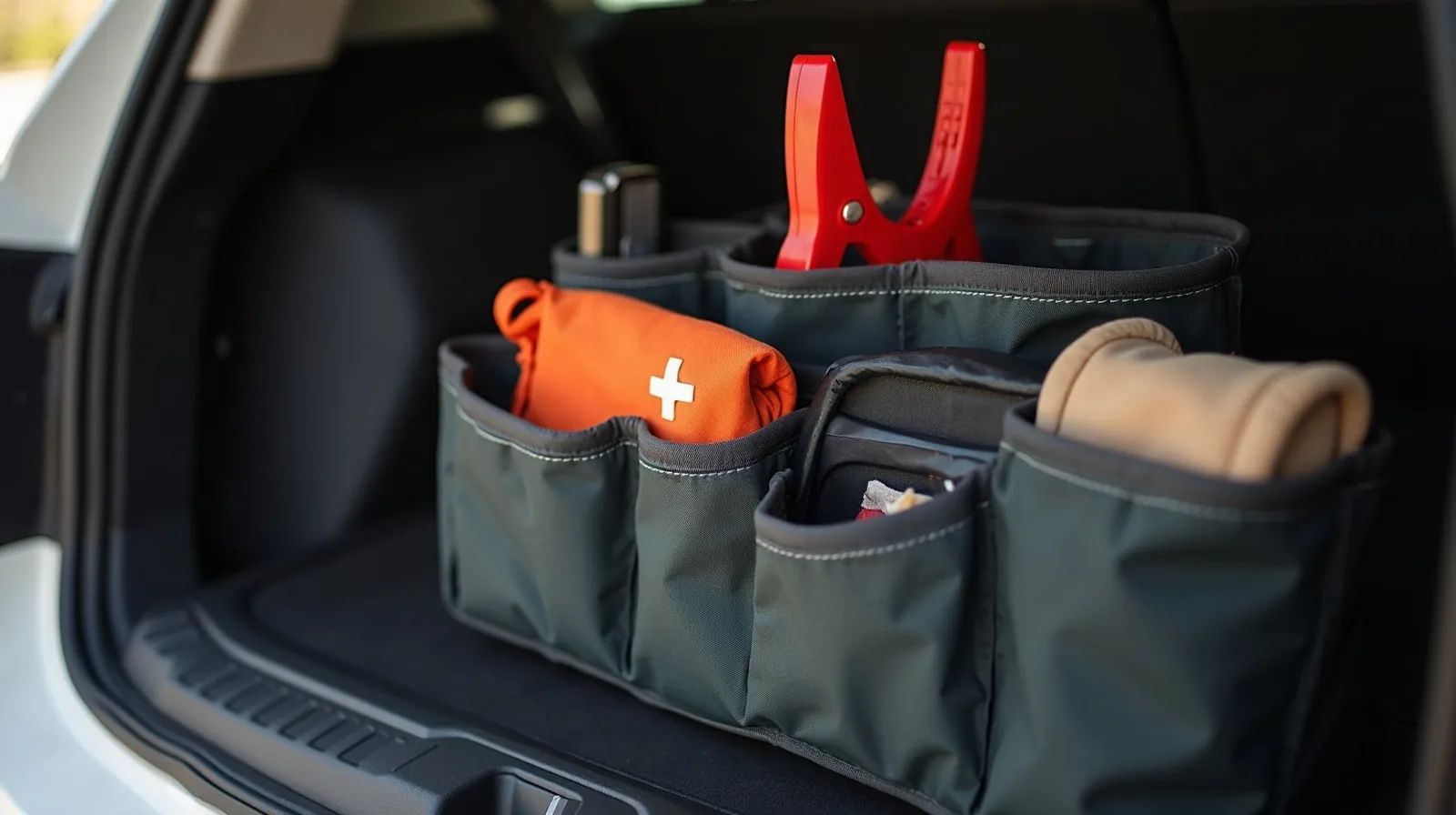
A trunk with no internal structure turns into a single sliding pile the moment you brake or turn a corner. A collapsible trunk organizer with a few compartments solves this cheaply, and it’s worth thinking about the zones deliberately rather than just tossing things in:
- An emergency kit zone. Jumper cables, a small first-aid pouch, a flashlight, and basic tools, kept together and never dug through for non-emergency reasons.
- Reusable bags. A folded stack kept in one spot solves the endless problem of forgetting bags at the store — they’re back in the trunk within minutes of unloading groceries if that’s their only home.
- Activity or sport gear. Whatever rotates through regularly — a gym bag, sports equipment, a stroller — gets its own zone so it doesn’t migrate into the emergency kit’s space.
Keeping these separate means grabbing the jumper cables doesn’t mean unloading three bags of gear first. A folding organizer also has the advantage of collapsing flat when you need the trunk empty for a big grocery run or a bulky purchase, then popping back into shape for the drive home.
A small cabin caddy
The trunk handles the bulk items, but the cabin needs its own tiny system for the things used in transit. A small caddy that hangs on the back of a seat or sits in a cupholder, holding a trash bag, a phone charger, hand sanitizer, and a few napkins, catches most of what would otherwise end up loose on the seats. The litter bag habit specifically is worth building deliberately — a dedicated small trash bag clipped somewhere visible means wrappers and cups have an obvious home instead of accumulating on the floor until a big cleanup is unavoidable. Empty it into a real trash can every time you fill up with gas or run an errand near one, rather than waiting until it’s overflowing, and it never becomes a job big enough to put off.
The five-minute weekly clear-out
The system above only holds if something empties it regularly. Pick one low-effort moment each week — after the Saturday errands, before a Monday commute, while the tank is filling at the gas station — to pull the trash bag, toss any stray items back to their proper zones, and do a quick visual scan of the seats and floor. Five minutes weekly prevents the multi-hour reset from ever becoming necessary again, and it’s easy enough to hand off to an older kid as their own small responsibility if that helps it actually happen every week. The underlying rule worth keeping in mind: if something doesn’t clearly earn its place in one of the zones, it doesn’t belong in the car at all — it goes back into the house the next time you’re carrying something in anyway.