Camping gear adds up fast — a tent, sleeping bags, pads, a stove, and a cooler can run into real money before a single night outdoors tells you whether you even enjoy sleeping on the ground. The better first move is to borrow or rent nearly everything for the first trip or two, find out what you actually like and don’t, and only spend on gear once you know it’s a hobby worth equipping for. It also protects you from buying the wrong version of everything — a three-season tent when you camp mostly in the shoulder seasons, or a bag rated far colder than you’ll ever actually need.
Don’t buy a garage of gear for a hobby you haven’t tried
A full beginner kit — tent, two sleeping bags, pads, a stove, a lantern, a cooler — is a significant purchase, and most of it is highly specific gear that’s hard to resell for close to what it cost. Meanwhile a friend, a family member, or a local outdoor-gear rental shop can usually supply the same list for a single trip at a fraction of the cost, with the added benefit that someone else already knows how to pitch that particular tent.
- Ask around first. Tents and sleeping bags spend most of the year in a closet; borrowing one for a weekend rarely inconveniences the owner.
- Outdoor-gear rental shops exist in most regions with hiking or camping traffic and rent full kits by the day or weekend.
- Camping supply stores sometimes rent as well, and staff can point you to the right size and season of gear for your specific trip.
- Community groups and local clubs built around hiking or the outdoors often have gear libraries or members happy to lend a spare tent to someone just starting out.
Start with a car-camp close to home
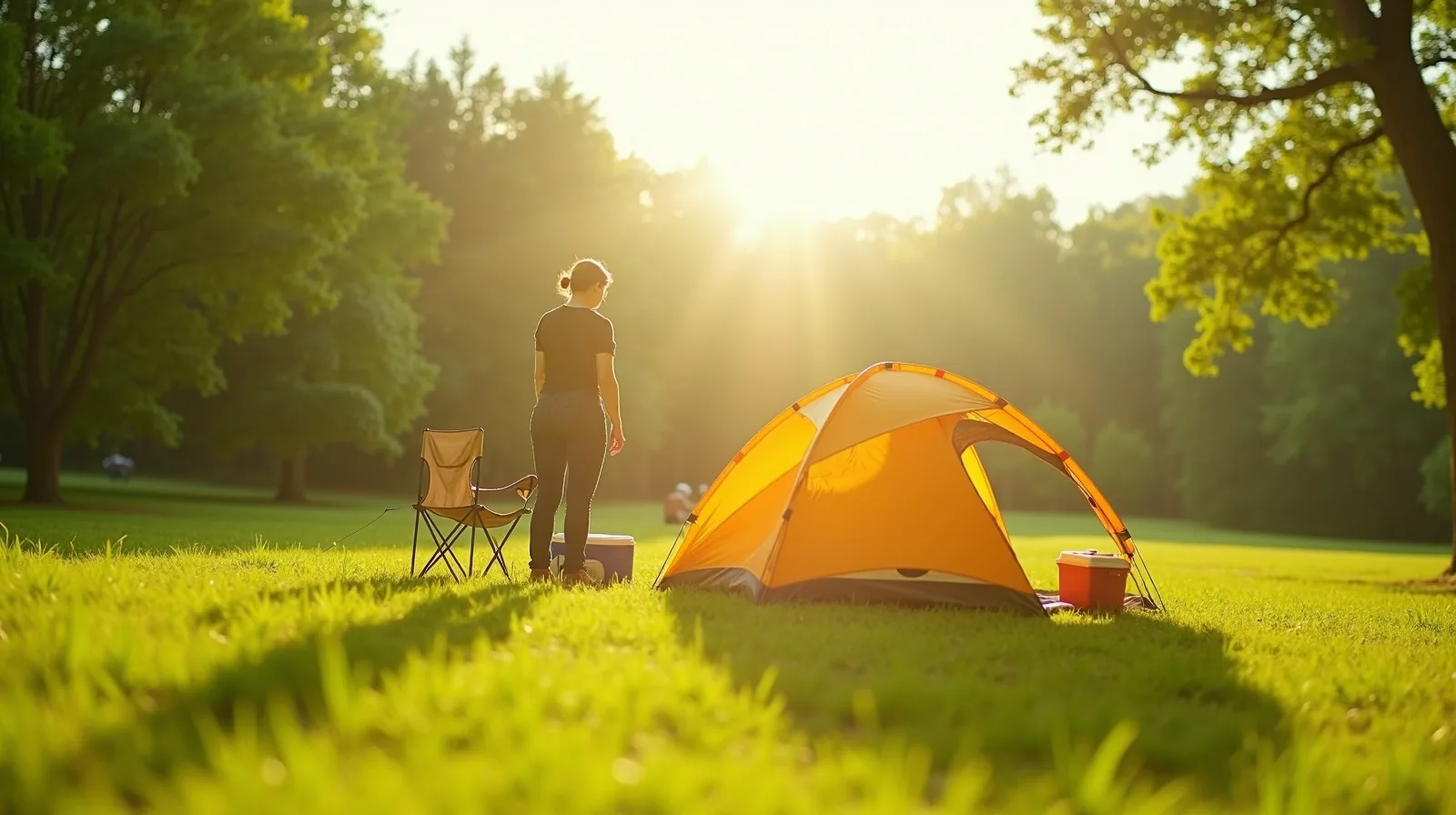
The first trip should minimize every variable except the one you’re actually testing: whether you like camping. A car-camping site within an hour or two of home, where the car stays parked next to the tent, means a forgotten item is a short drive away instead of a trip-ending problem, and an uncomfortable night means you can simply drive home instead of hiking miles out with a pack. Save the backcountry trip, the multi-day hike, and the gear that goes with it for after you know the basics suit you.
A short trip also lowers the stakes if the weather turns or the tent proves harder to pitch than expected. One rough night close to home is a minor inconvenience; the same rough night deep in the backcountry, with a long hike back out, is enough to put someone off camping entirely.
What’s genuinely worth owning from day one
A short list of items is cheap, useful well beyond camping, and safe to buy even before a first trip: a headlamp, a reusable water bottle, a basic first-aid kit, and a multi-tool. None of these are camping-specific enough to feel wasted if the hobby doesn’t stick, and all of them get used on hikes, road trips, and around the house regardless. A sturdy pair of closed-toe shoes belongs on this list too, since borrowed footwear rarely fits well and blisters can sour a first trip faster than almost anything else. A basic camp chair is worth adding to that short list as well — it’s inexpensive, folds small, and does more for a comfortable evening around a campsite than almost any other single piece of gear.
If you do buy, start with the sleep system
Once a couple of trips confirm camping is worth investing in, resist the urge to buy the whole list at once. Buy the sleep system first — a sleeping bag rated for the coldest conditions you’ll actually camp in, and a decent pad, since a bad night’s sleep is what ends most people’s camping trips early and colors the whole experience. A tent is the next priority, sized for who you’ll actually be camping with rather than the biggest one available.
A stove, a proper cooler, and the smaller accessories can wait until you know which trips you’ll actually be taking, since a stove suited to a quiet weekend car-camp is a poor match for a longer backcountry trip, and buying before you know the difference usually means buying twice. Let the trips you actually take, not the ones you imagine taking, decide what belongs in the gear closet. A short first-trip checklist helps here too — borrowed shelter and sleep system, owned headlamp and first-aid kit, food and water planned for the number of meals you’ll actually cook, and a written note of anything that felt missing so next time’s borrow list is a little sharper.