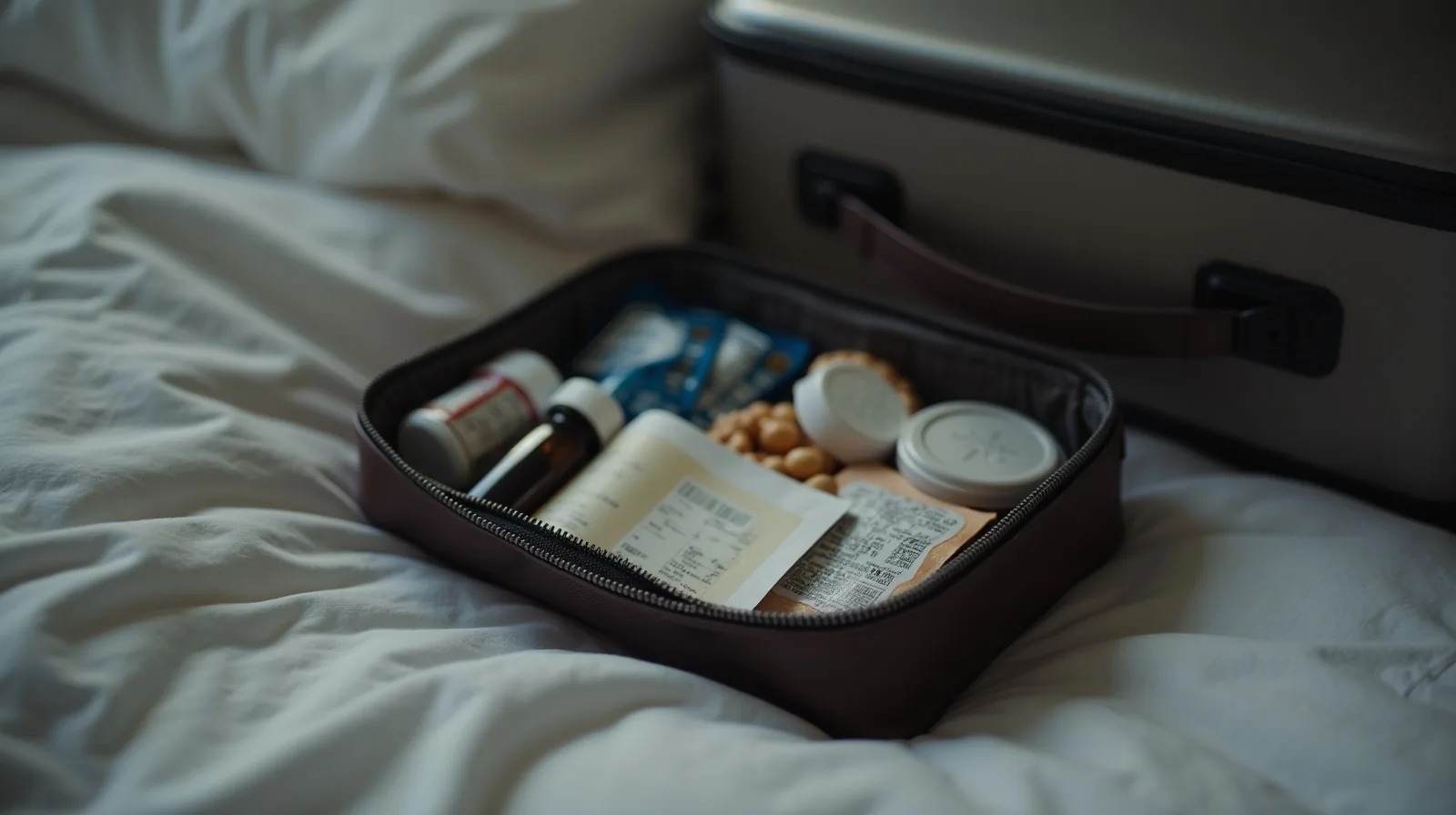
Picture getting a headache, an upset stomach, or a small cut while traveling — at night, in an unfamiliar city, maybe where you don’t speak the language and don’t know where the nearest pharmacy is or whether it’s open. It’s a miserable, stressful scramble for something you’d have handled in thirty seconds at home. A small, well-chosen travel medicine kit prevents exactly this: it turns the common travel ailments from a trip-derailing ordeal into a quick fix from your own bag. It weighs almost nothing and you’ll be deeply grateful for it.
Personal prescriptions first
The most important part of the kit is your own regular medications, handled carefully:
- Bring enough for the whole trip, plus a few extra days in case of delays — don’t assume you can refill abroad.
- Keep them in your carry-on, not checked luggage, so a lost bag doesn’t leave you without essential medicine, and in their original labelled containers to avoid trouble at borders.
- Carry a note of what you take (names and doses), and check whether any of your medications have restrictions at your destination.
These are the ones you truly can’t improvise, so they come first.
The everyday remedies
Next, pack small quantities of the over-the-counter basics that cover the most common travel complaints — you don’t need a pharmacy, just a few of each:
- Pain and fever relief — a general pain reliever handles headaches, aches, and fevers.
- Stomach remedies — something for upset stomach and diarrhoea (a very common travel problem), and an antacid. Rehydration salts are worth it for trips where stomach bugs are likely.
- Allergy relief — an antihistamine for reactions, bites, and unexpected allergies.
- Motion-sickness tablets if anyone in your party is prone, especially for winding roads, boats, or flights.
Small travel-size packets of each keep the kit compact.
Basic first aid
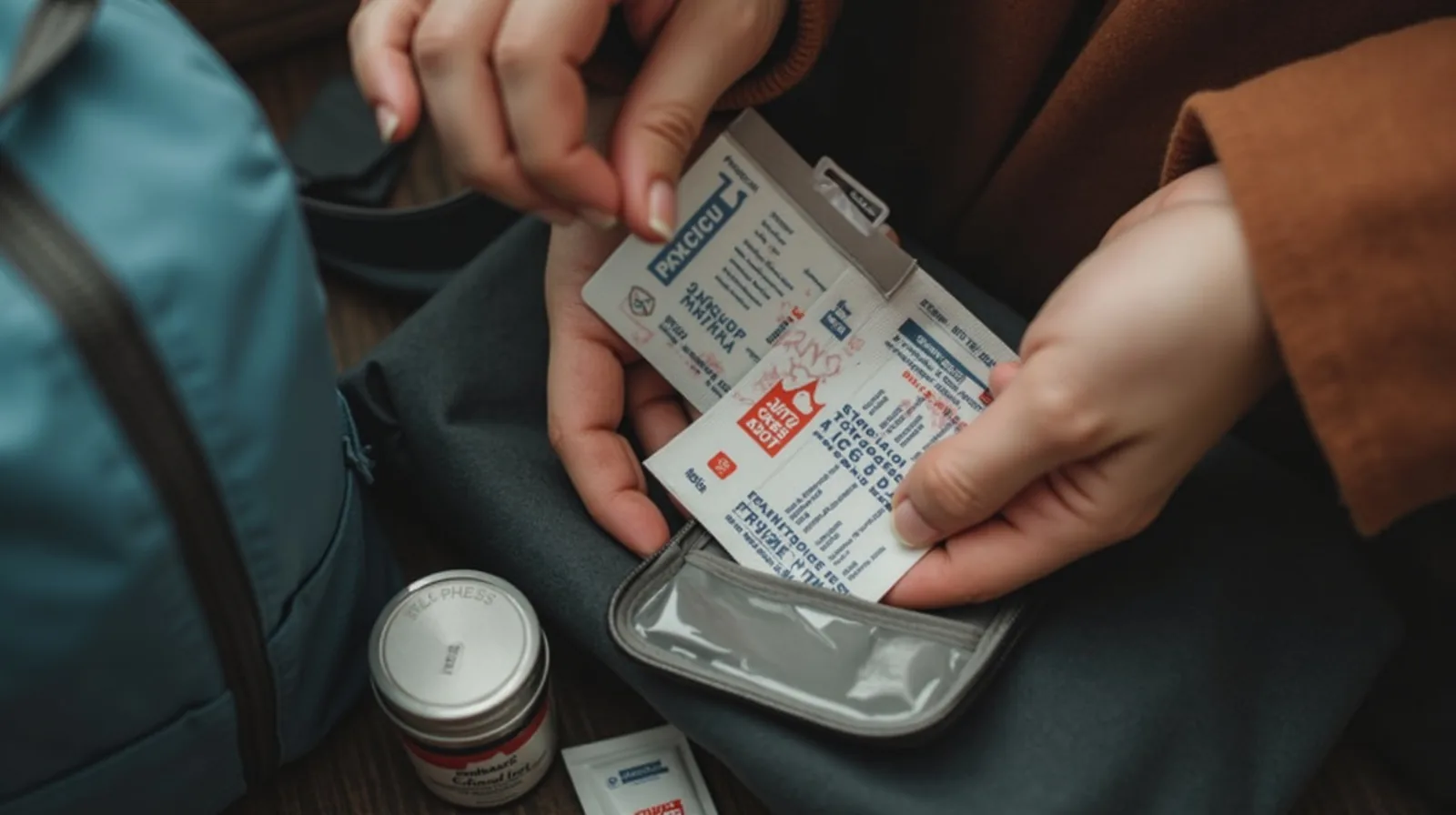
Round it out with simple first-aid supplies for minor mishaps: adhesive bandages, antiseptic wipes or cream, blister plasters (a traveler’s best friend on long walking days), tweezers, and any small items you tend to need. This handles the cuts, scrapes, and blisters that are almost guaranteed on an active trip.
Destination-specific extras
Finally, tailor the kit to the trip. Sunny or beach destination? Add sunscreen and after-sun. Buggy or tropical area? Insect repellent, and check whether you need any specific precautions for where you’re going. Doing anything active or remote? Consider a bit more first aid. A short look at your destination’s particular risks tells you the few extras worth adding — and, for some destinations, whether to see a travel clinic before you go.
A travel medicine kit is a tiny bit of packing that saves you from one of travel’s most stressful situations: being unwell somewhere unfamiliar with no easy help. Pack your prescriptions carefully, add the everyday remedies and basic first aid, and tailor a few extras to your destination. Prepare it once, and a problem that could derail a trip becomes a thirty-second fix from your own bag.