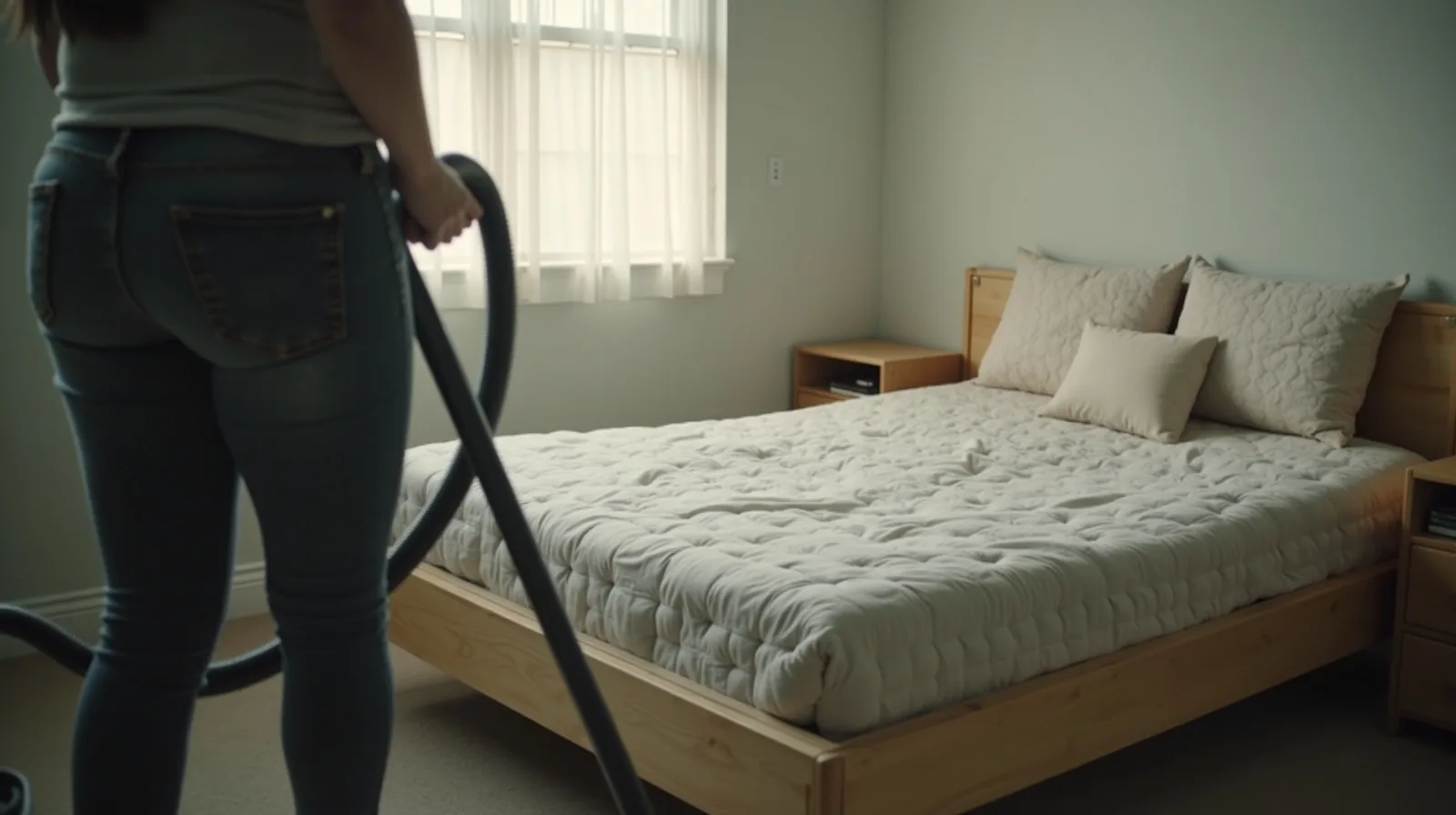

Climbing into a hotel bed feels different from climbing into your own. The sheets are smooth and taut, the covers sit flat instead of bunching at your feet, and the pillows look plump instead of flattened. It is tempting to blame the thread count, but most of that feeling comes from how the bed is built, not what it costs.
Housekeeping teams make hundreds of beds a week, so they rely on a short sequence that is fast and repeatable. The same sequence works at home with the bedding you already own. Once it becomes habit, the full version takes about ten minutes on wash day and the daily touch-up takes two.
Why a Hotel Bed Feels Different
A hotel bed is a stack of thin layers, each with one job. That is what makes it feel crisp and adjustable instead of heavy:
- A mattress protector keeps sweat and spills out of the mattress and gives the fitted sheet a smooth surface to grip.
- A fitted sheet pulled tight, with no wrinkles across the sleeping surface.
- A flat top sheet tucked firmly at the foot and sides, so it stays put all night and is the layer that touches you.
- A light blanket or duvet on top for warmth. In many hotels, it is a duvet in a white cover, folded back or laid flat.
- Two to four pillows, stacked rather than scattered, with an extra throw pillow or bed runner only for looks.
The layered approach also explains why hotel beds sleep comfortably across seasons: you can push the duvet off and still be covered by the top sheet, instead of choosing between a heavy comforter and nothing at all.
Start With a Smooth, Tight Base
Every wrinkle on top starts underneath. Get the bottom layers right, and the rest of the bed falls into place.
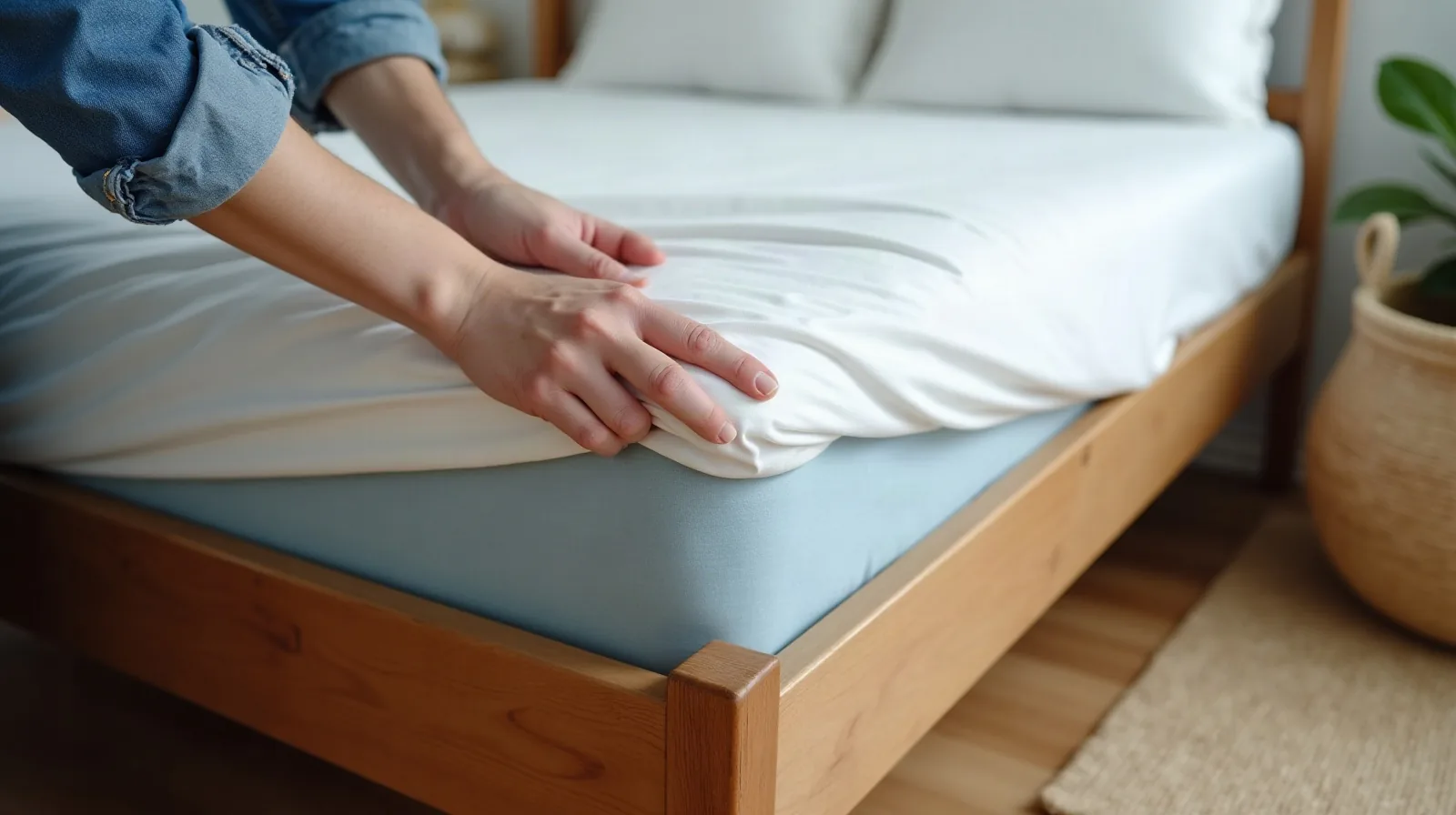
- Strip and straighten the mattress. Square the mattress on the frame and smooth the protector so it is flat with no folds or lumps.
- Check the pocket depth. A fitted sheet that is too shallow pops off the corners, and one that is too deep leaves loose fabric that bunches. Measure your mattress height, including any topper, and choose fitted sheets with pockets a little deeper than that.
- Do diagonal corners first. Fit the top-left corner, then the bottom-right, then the remaining two. Pulling on the diagonal stretches the sheet evenly instead of dragging it toward one end.
- Smooth from the center out. Run your flat hands from the middle of the mattress toward the edges to push any slack under the sides.
If a fitted sheet still creeps loose, sheet straps or suspenders that clip across the corners under the mattress hold it tight, and they are inexpensive and easy to fit.
The Flat Sheet and the Hospital Corner
The tucked flat sheet is what gives a hotel bed its snug, tucked-in feel. Many people skip the top sheet at home, but it is worth keeping: it is far easier to wash every week than a duvet cover, so it keeps the heavier layers clean longer.
- Lay it face-down and centered. Put the printed or finished side face-down so it shows when you fold the top back. Line the top edge up with the head of the mattress and let equal amounts hang on both sides.
- Tuck the foot. Lift the end of the mattress slightly and tuck the whole bottom edge of the sheet under it, pulling it tight toward the foot of the bed.
- Make the corner. At one corner, pick up the side edge of the sheet about a foot and a half from the foot of the bed and lift it straight up so it forms a triangle lying on top of the mattress.
- Tuck what hangs below. Push the loose fabric still hanging below the triangle under the mattress.
- Drop and tuck the triangle. Let the triangle fall down the side of the mattress, smooth it into a neat 45-degree fold, and tuck the rest of the side under. Repeat on the other corner.
Hotels often leave the sides untucked near the head so the sheet is easy to slip into. If you sleep warm or kick around at night, tuck only the foot and corners and leave the sides loose.
Getting the Duvet Cover On Without a Fight
Wrestling a duvet insert into a cover is the step most people dread. Turning the cover inside out turns a five-minute struggle into one minute:
- Turn the cover inside out and lay it flat on the bed with the opening at the foot.
- Lay the insert on top of it, lining up the corners. If the cover has inner corner ties, tie them to the insert now.
- Roll both together from the head of the bed toward the foot, into one tight roll.
- Flip the opening over the roll. Reach into the opening and turn it right-side out around the end of the roll, working all the way across.
- Unroll toward the head, close the cover, then grab the two top corners and give the whole thing a firm shake to settle the filling.
For the hotel look, lay the duvet flat across the bed and fold the top quarter back toward the foot, along with the top sheet, so a band of the sheet shows at the head. Or fold the duvet in thirds and lay it across the foot of the bed, which keeps it fluffy and out of the way.
Pillows: Fewer, Fuller, and Stacked
A pile of mismatched pillows is the fastest way to make a bed look unfinished. Hotels keep it simple:
- Two sleeping pillows per person, one firmer and one softer, so guests can choose. At home, keep only the ones you actually use.
- Stack them upright against the headboard or lay them flat in two neat layers, rather than scattering them across the bed.
- Fluff before you place them. Hold a pillow at both ends and push the ends toward the center a few times, then give it a shake. Down and fiber pillows regain much of their loft this way.
- Use pillow protectors under the cases. They keep sweat and oils out of the pillow itself, which is what turns pillows yellow and flat over time.
A pillowcase that is the right size matters too. A case that is too big leaves a floppy tail; one that is too small squashes the pillow. Tuck any extra fabric at the open end under the pillow so the visible side looks smooth.
Keep It Hotel-Fresh: Washing and Rotation
The crisp feel fades if the sheets themselves are tired. A few washing habits keep that just-made feeling longer:
- Wash sheets and pillowcases weekly, or every two weeks at most. Body oils build up faster than they look and make fabric feel limp and dingy.
- Own two sets per bed. You can make the bed right away with clean sheets instead of waiting for the wash, and each set wears half as fast.
- Go easy on detergent and skip heavy fabric softener. Both leave a residue that makes sheets feel waxy instead of crisp. Use the warmest water the care label allows.
- Pull them from the dryer slightly early. Over-drying sets wrinkles and wears out fibers. Take sheets out while they are barely damp and put them on the bed or fold them straight away, smoothing them flat with your hands.
- Wash protectors, duvet covers, and blankets monthly, and pillows and inserts a few times a year.
Fold a set together and store it inside one of its own pillowcases. The whole set stays together in the linen closet, so there is no hunting for the matching top sheet on wash day.
The Two-Minute Morning Make
Once the bed is properly built, keeping it neat is quick. Because the sheets are tucked, they barely move overnight, so you are only resetting the top layers:
- Let it air first. Pull the covers back for a few minutes while you get ready, so overnight moisture can escape before the bed is closed up.
- Pull the top sheet up and smooth it flat with both hands from the center out.
- Pull the duvet up and fold back the top, or fold it in thirds at the foot, whichever is your look.
- Fluff and stack the pillows.
That is all. A made bed makes the whole room look tidier and is a nicer bed to come back to at night.