
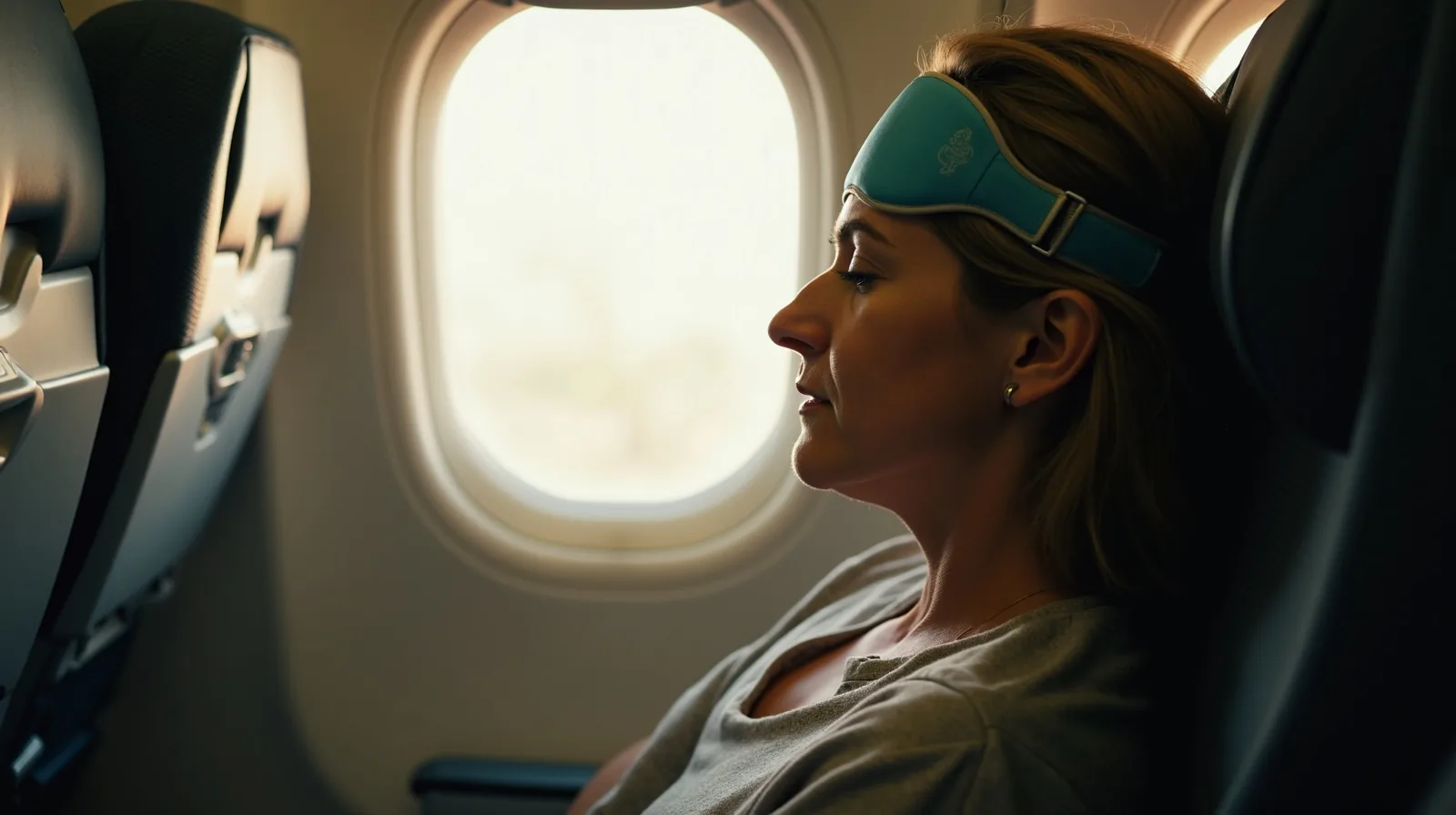
You land across the world, and for a few days you feel wrong — wide awake at 3 a.m., foggy at noon, hungry at odd hours. That's jet lag, and it's not simply the tiredness of a long flight. It's a genuine mismatch: your body's internal clock is still running on your home time zone while the world around you has moved hours ahead or behind. Understanding that is the key to fixing it, because the goal isn't to fight the fatigue — it's to help your internal clock catch up to local time as fast as possible. A few things genuinely speed that up; a few popular remedies don't do much.
Why jet lag happens
Your body runs on an internal clock — a roughly 24-hour rhythm that governs when you feel sleepy, alert, and hungry. It's tuned to your home time zone, and it can't teleport. When you fly across several zones, that clock is suddenly out of sync with the new local time, so it tells you to sleep when it's noon and to wake when it's midnight. The clock does adjust, but slowly — roughly a zone a day — which is why a big jump leaves you scrambled for several days. Everything that helps is really just a way to nudge that clock along faster.
Light is the master switch
The single most powerful tool for resetting your clock is light, because light is the main signal your body uses to decide what time it is. Getting the timing right speeds the shift dramatically:
- Traveling east (say, to Europe), you need to shift earlier — seek bright morning light at your destination and avoid it late.
- Traveling west, you need to shift later — get light in the late afternoon and evening.
- Get outside. Natural daylight is far stronger than indoor lighting, so a walk outdoors at the right time does more than sitting by a window.
Even without memorizing the rules, the simple habit of spending time outside in daylight at your destination helps your body take its cue from the local sun.
Shift your schedule to local time immediately
The fastest way to adjust is to live on the new time zone the moment you arrive — ideally starting on the plane. Set your watch to the destination time when you board and begin thinking in it. Eat meals at local mealtimes, and sleep at local bedtime, even if your body protests. If you land in the morning, push through the day and go to bed that night rather than collapsing at 2 p.m. The quicker you adopt local eating and sleeping times, the quicker your internal clock follows.
Nap carefully, and don't overdo the fixes
When you arrive exhausted, a nap is tempting — and a short one is fine, but a long afternoon sleep will wreck that night's rest and stall your adjustment. Keep any nap brief and early. A few more realistic notes:
- Hydrate. Long flights are dehydrating, and dehydration makes you feel worse; drink water and go easy on alcohol and heavy caffeine, which disrupt sleep.
- Use caffeine strategically — in the morning to help you stay awake, not late in the day.
- Be realistic about supplements. Some travelers find a sleep aid helps them sleep at the new bedtime, but nothing substitutes for light and schedule; treat any aid as a minor helper, not a cure.
Plan around it
Finally, work with jet lag rather than pretending it won't happen. For a short trip, sometimes it's easier to stay closer to home time than to fully flip. For a big time change, give yourself an easy first day and don't schedule anything critical for the morning after you land. For important trips, some people start shifting their sleep schedule a little earlier or later in the days before departure, so they arrive partway adjusted. A gentle plan beats gritting your teeth.
Jet lag is your internal clock lagging behind the local one, and you beat it by helping that clock catch up: chase the right light, jump onto local time immediately, nap only briefly, stay hydrated, and plan a soft landing. Do that and the fog lifts in a day or two instead of dragging across your whole trip.