
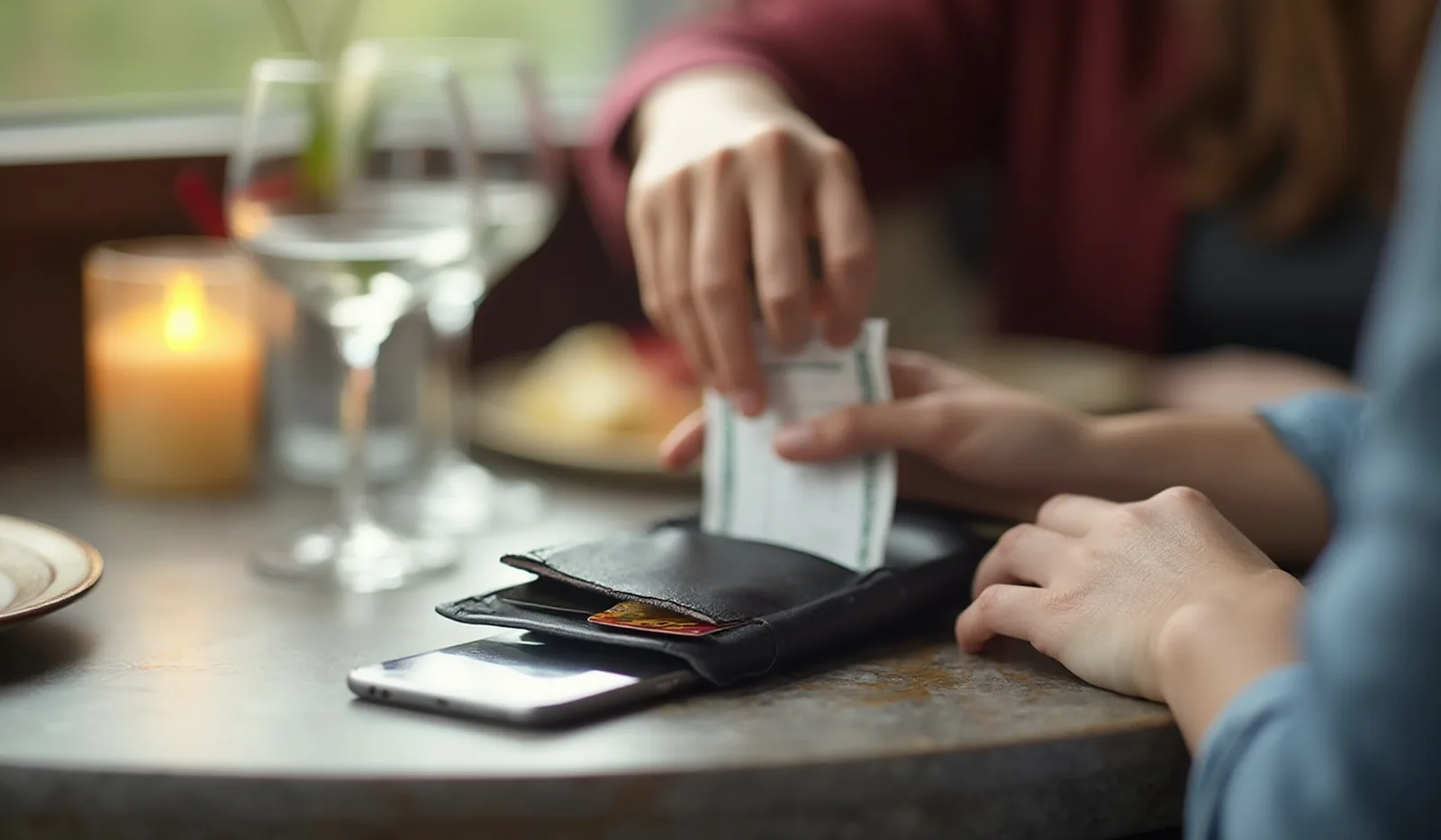
Every checkout screen seems to flip around and ask for a tip now, sometimes before you even know what the total is. It’s no surprise “how much” has started to feel like a guessing game. But the actual expectations underneath all that screen prompting haven’t shifted nearly as much as the confusion suggests — sit-down restaurant tipping still runs on roughly the same baseline it always has, and most other categories have equally clear defaults once you know where to look. This isn’t a guilt trip about supporting service workers or a rant about tip creep. It’s a plain reference: the range genuinely expected in each situation, what pushes you toward the top or bottom of it, and where the real norm ends and the screen’s suggestion begins.
Why Tipping Feels More Confusing Than It Used To
Point-of-sale tip screens now show up at counters that never used to prompt for one — a bakery pickup window, a self-serve frozen yogurt shop, a hardware store checkout. The suggested percentages on those screens are often set as high as sit-down restaurant tipping, which makes it feel like the norm has quietly doubled everywhere. It hasn’t; the screen is a nudge, not a rulebook, and plenty of people tap “no tip” on it without a second thought. The distinction worth holding onto is simple: percentage-based tipping is really for situations where a person does sustained, personal work for you — taking your order, checking on your table, cutting your hair, carrying your bags up three flights of stairs. A clerk handing over a pre-made item at a counter is a different category, even when the screen presents an identical-looking prompt. Every section below uses that one test as its baseline, then adjusts for the specifics of the situation.
Restaurants and Bars
Full-service sit-down dining is the clearest case and the one most people already get roughly right: 18–20% of the pre-tax bill for solid, ordinary service, 15% if it was slow or a little off but not genuinely bad, and 20–25% for a server who went out of their way. Counter-service restaurants — order at a register, carry your own tray, bus your own table — sit in a lighter category; a dollar or two or rounding up is a nice gesture, not an obligation. At a bar, $1–2 per drink is standard for simple orders, or 15–20% of the total if you’re running a tab. Buffets get a lighter touch, around 10%, since the service is mostly refills and clearing plates rather than full table service. One thing worth checking before you tip on top: many restaurants automatically add an 18–20% gratuity for larger parties, and it’s printed right on the receipt if you look.
Coffee Shops, Takeout, and Delivery
A quick coffee order at a counter doesn’t call for a tip; rounding up is a nice touch for a barista who handled a complicated custom drink, but skipping it for a straightforward order is completely normal. Takeout you order and pick up yourself works the same way — not typically tipped, though rounding up is a fine bonus gesture if the order was large or came together fast for you. Delivery is where the math changes: 15–20% of the order total is the real standard, with a practical floor of about $5 even on a small order, since the driver’s trip costs roughly the same effort regardless of what’s in the bag. Bad weather, a long distance, or a building with a confusing entrance is worth tipping toward the top of that range or a bit above it.
Salons, Spas, and Personal Care
Hairstylists, barbers, manicurists, and massage therapists all fall into the same 15–20% range as restaurant service, calculated on the price of the service itself. If more than one person worked on you — a colorist and a separate stylist, say — either split the tip between them or tip each one for their part. Whether to tip an owner who does the work themselves is genuinely regional: plenty of clients still do, and it’s never wrong to, even where it isn’t strictly expected. When in doubt, the front desk will usually tell you plainly if it asks.
Hotels: Bellhops, Housekeeping, and Valet
A bellhop who carries your bags gets $1–2 per bag. Housekeeping is the one most travelers forget: $2–5 per night, left daily rather than saved for checkout, since a different person may clean the room each day and the tip is meant for whoever actually did the work. Valet parking calls for $2–5 when your car is brought back to you; tipping on drop-off is optional, though it’s a nice touch if you want faster retrieval later. Concierge tips are reserved for something genuinely above ordinary help, like tracking down a reservation everyone else told you was booked solid.
Rideshare and Taxis
Rideshare has settled into the same 15–20% norm as a traditional taxi. Bump that up for a driver who helped with heavy luggage, waited through a long delay, or navigated a genuinely difficult pickup. It isn’t technically mandatory, but it’s expected closely enough now that consistently skipping it will show up in how a driver rates the ride, same as it would for you.
Home and Trade Services
Movers on a local move typically get $20–40 per mover, scaled up for a longer haul, a lot of stairs, heavy furniture, or brutal heat. Furniture or appliance delivery and installation isn’t usually tipped by policy, but $10–20 per person is a welcome gesture for a job that took real effort. Trade professionals — plumbers, electricians, general contractors — are a different category entirely: they set their own rates, and tipping isn’t customary or expected. A cold drink on a hot day does more for the relationship than cash ever would, and a tip on top is appreciated but never assumed.
When You Genuinely Don’t Have to Tip
Plenty of situations fall outside the sustained-service test entirely, and it’s worth naming them plainly: fast food counters, self-checkout, straightforward retail purchases, and a to-go coffee you ordered and picked up yourself. None of these require a tip just because a screen offered the option. Genuinely poor service at a sit-down restaurant is its own separate question — most people trim toward 10% rather than skip the tip outright, since kitchen staff and others often share the tip pool and a manager is the right place to raise a real problem. The point of all of this isn’t to make tipping feel like a moral test. It’s to take the guesswork out of it, so a screen asking a question doesn’t get to decide the answer for you.
None of this requires memorizing a chart before you leave the house. It comes down to one question, asked quickly in the moment: did a person just do sustained, personal work for me, or did I simply complete a transaction? Everything above follows from that one distinction — the percentage moves around by situation, but the test underneath it never does.